
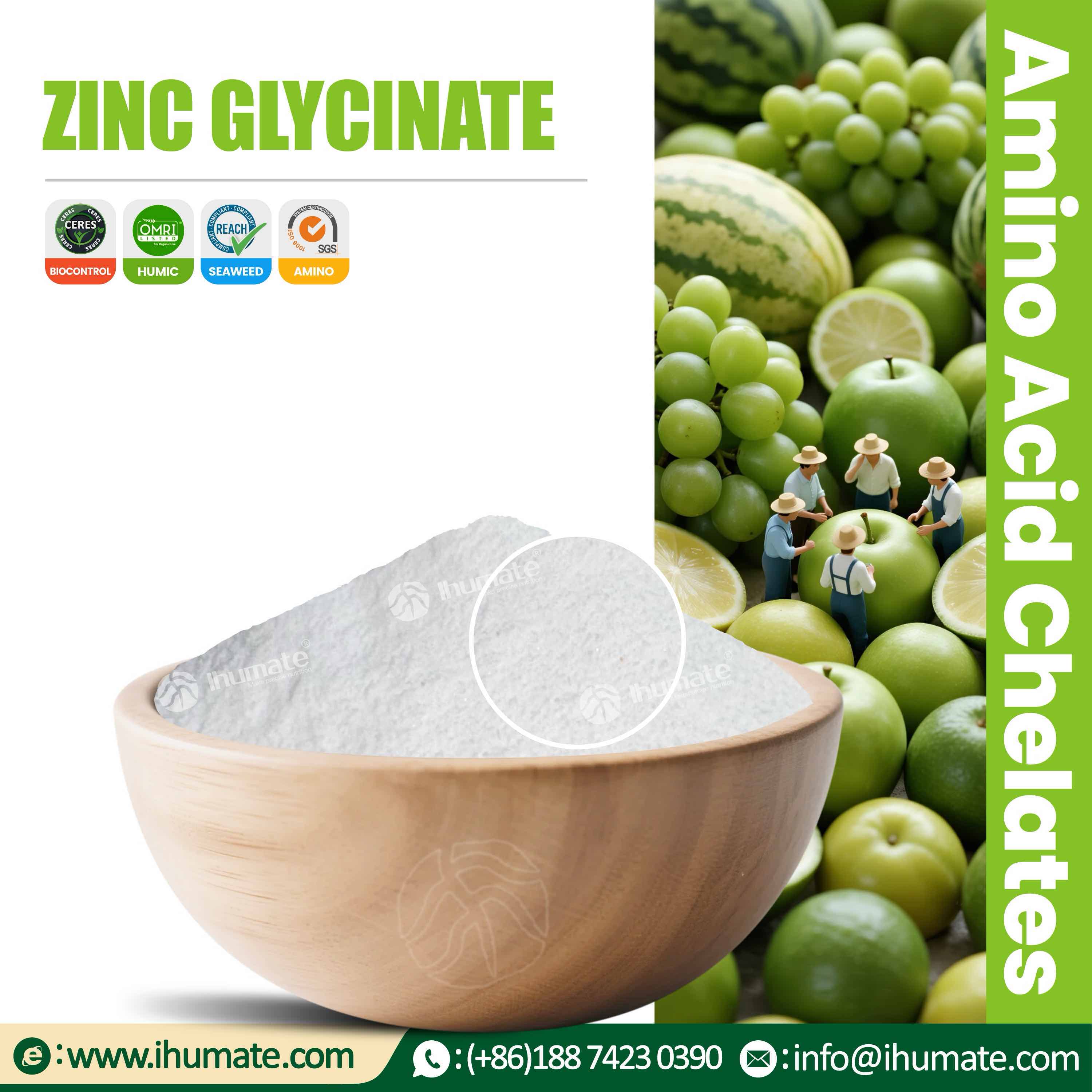

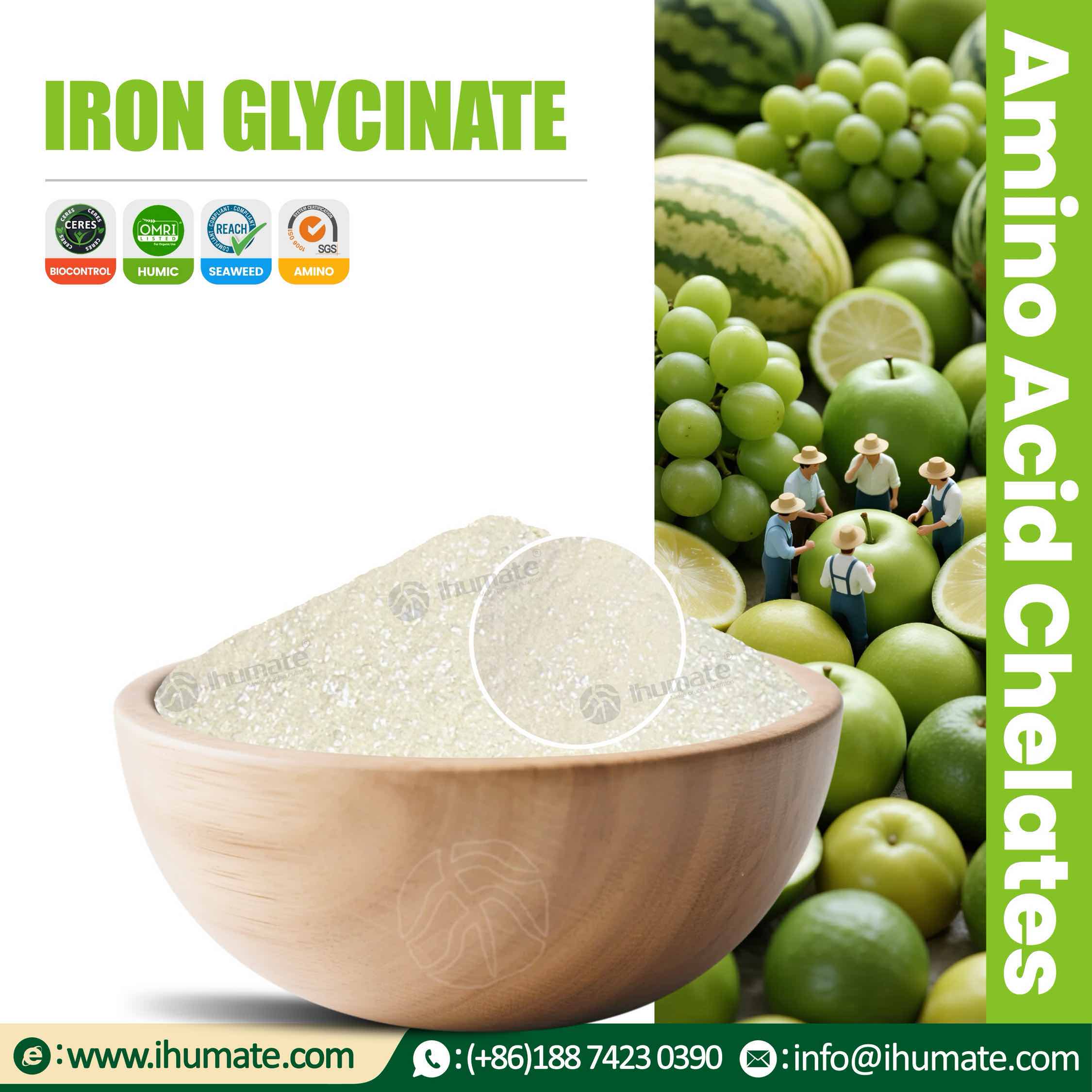


Iron Glycinate
- Appearance: Off-White
- Fe²⁺: > 17%
- Fe³⁺: < 0.5%
- Total glycine: > 20%
- Loss on drying: < 10%
- Size: 100 mesh powder
Reference price range:USD 1200 - 2000
Iron Glycinate
Glychela-Fe: glycine-chelated ferrous iron for targeted chlorosis management
Young leaves turning yellow between green veins, followed by weak new growth, can signal iron deficiency in fruit, vegetable and greenhouse crops. Iron supports chlorophyll synthesis, photosynthetic electron transport and enzymes. A field may contain plenty of iron yet provide too little usable iron when soil pH, lime or bicarbonate-rich irrigation water restricts availability. Confirm the cause with soil pH, water quality and leaf assessment before choosing a treatment.
Glychela-Fe is a fully water-soluble, off-white 100-mesh powder with > 17% Fe²⁺, < 0.5% Fe³⁺ and > 20% total glycine. Glycine is a small organic ligand that coordinates iron and can help keep it dispersed under suitable mixing conditions. The product provides a defined iron source for foliar nutrition and water-soluble fertilizer formulations; its glycine content is not a substitute for major nitrogen nutrition. Many non-grass crops reduce Fe³⁺ to Fe²⁺ at the root surface before uptake, but iron source performance cannot be judged from oxidation state alone.
Compared with simple ferrous sulfate, glycine coordination can reduce the risk associated with free iron precipitating in a suitable spray or mixing solution; actual stability depends on pH, water and tank partners. Compared with Fe-EDTA, it provides an amino-acid ligand option, without a blanket claim of higher uptake. For persistent root-zone chlorosis in strongly alkaline or calcareous soil, Fe-EDDHA is generally more stable at high pH and may be the better soil-applied choice.
Use foliar iron where a diagnosed deficiency needs targeted treatment, or include it in fertigation only after checking irrigation water and root-zone pH. Because iron moves poorly within plants, monitor subsequent new leaves and address causes such as high pH, waterlogging or damaged roots. Set rate and frequency by the local label and run a jar test and small-area trial before wider use.
Iron Glycinate Specifications
| Technical Parameters | Detailed Specs | Testing Methods | Reference Standards |
|---|---|---|---|
| Appearance | Off-White | - | - |
| Fe²⁺ | > 17% | - | - |
| Fe³⁺ | < 0.5% | - | - |
| Total glycine | > 20% | - | - |
| Loss on drying | < 10% | - | - |
| Size | 100 mesh powder | - | - |
Iron Glycinate - Introduction Video
- Targets young-leaf chlorosis
- Glycine coordination
- Choose chelates by conditions
Iron Glycinate - Water Solubility Video
- Defined ferrous-iron specification
- Foliar and soluble-fertilizer fit
COA, TDS, MSDS & HM Test Reports
Certificate of Analysis (COA)
Certificate of Analysis: Iron Glycinate
Technical Data Sheet (TDS)
TDS: Iron Glycinate
Safety Data Sheet (MSDS)
MSDS: Iron Glycinate
Heavy Metal Test Report
Heavy Metal Test Report: Iron Glycinate
Download Support
Need custom documents or specific test results?
Frequently Asked Questions

1
How does iron glycinate compare with ferrous sulfate, Fe-EDTA and Fe-EDDHA?
Glycinate offers an amino-acid-coordinated option for foliar and soluble formulations. Iron salts are readily immobilized in high-pH soil; EDTA suits its own pH range, while EDDHA is more stable for root-zone supply in calcareous, high-pH soils.
2
Is Fe²⁺ always better absorbed than Fe³⁺?
Many non-grass crops reduce Fe³⁺ to Fe²⁺ at their root surface, while grasses use another mechanism. Ligand, pH and application route also matter; oxidation state alone does not establish superiority.
3
Will yellow leaves recover, and can it be tank mixed?
Confirm Fe deficiency and follow the label, watching new leaves; severely damaged leaves may not fully regreen. Jar-test and trial a small area before mixing, and address underlying root-zone or water problems.
4
Are you a trading company or a manufacturer?
We are a professional manufacturing enterprise. Our modern factory is located in Huozhou, Linfen, Shanxi, China. With an annual capacity of 500,000 tons, we invite global partners to visit our facility.
5
How do you perform quality control?
6
Do you provide samples?
7
What are the payment terms?
8
How can I track my shipment after payment?
9
What is the Minimum Order Quantity (MOQ)?
10
Can you customize packaging or print our logo?
11
How long is the delivery time?
More questions about our products?
Application & Dosage: Iron Glycinate
Confirm iron deficiency behind young-leaf interveinal chlorosis and check soil pH, irrigation water and root condition. Set rate and dilution from the local product label or a validated formulation. Avoid hot sun for foliar sprays; fully dissolve before fertigation and conduct water-quality, compatibility and small-area checks.
Targeted foliar iron
- Young-leaf chlorosis:Once Fe deficiency is confirmed, spray according to the label and monitor newly emerging leaves rather than expecting every older leaf to recover.
- Spray conditions:Treat in mild weather, avoiding heat, intense sunlight and imminent rain; trial a small area to check leaf tolerance.
Formulation and root-zone use
- Soluble fertilizer and fertigation:Premix in clean water; check irrigation pH, bicarbonate and solution clarity, then filter as required by the system.
- High-pH calcareous soils:For persistent root-zone deficiency, assess Fe-EDDHA and pH management rather than treating Fe-glycinate as a universal replacement.
Diagnosis and compatibility
- Confirm the cause:Use tissue, soil and water results to distinguish Fe deficiency from Mn or Zn deficiency and root injury.
- Jar testing:Check for precipitation, color change or separation before mixing with phosphates, alkaline fertilizers or pesticides.
Product Advantages: Iron Glycinate
Glychela-Fe pairs a defined, water-soluble Fe²⁺ specification with glycine coordination for targeted management of iron-deficiency chlorosis.
1
Targets young-leaf chlorosis
Iron supports chlorophyll-related processes and photosynthetic electron transport; supply it when diagnostics confirm interveinal yellowing is due to Fe deficiency.
2
Defined ferrous-iron specification
> 17% Fe²⁺, < 0.5% Fe³⁺ and > 20% total glycine make it easier to formulate to a target iron concentration.
3
Glycine coordination
The small organic ligand coordinates iron and can help dispersion under suitable pH and water conditions, reducing the mixing risk associated with free iron salts.
4
Foliar and soluble-fertilizer fit
A fully water-soluble 100-mesh powder is convenient to weigh and premix for foliar or liquid fertilizers; check water and filtration before drip use.
5
Choose chelates by conditions
Fe-EDTA and Fe-glycinate suit different formulations; Fe-EDDHA is usually the more stable soil-applied choice in strongly alkaline, calcareous conditions.
6
Diagnose the source of recurring yellowing
Assess young leaves, tissue tests, soil pH, irrigation bicarbonate and root condition so that other deficiencies or root damage are not mistaken for iron deficiency.
Certifications: Iron Glycinate
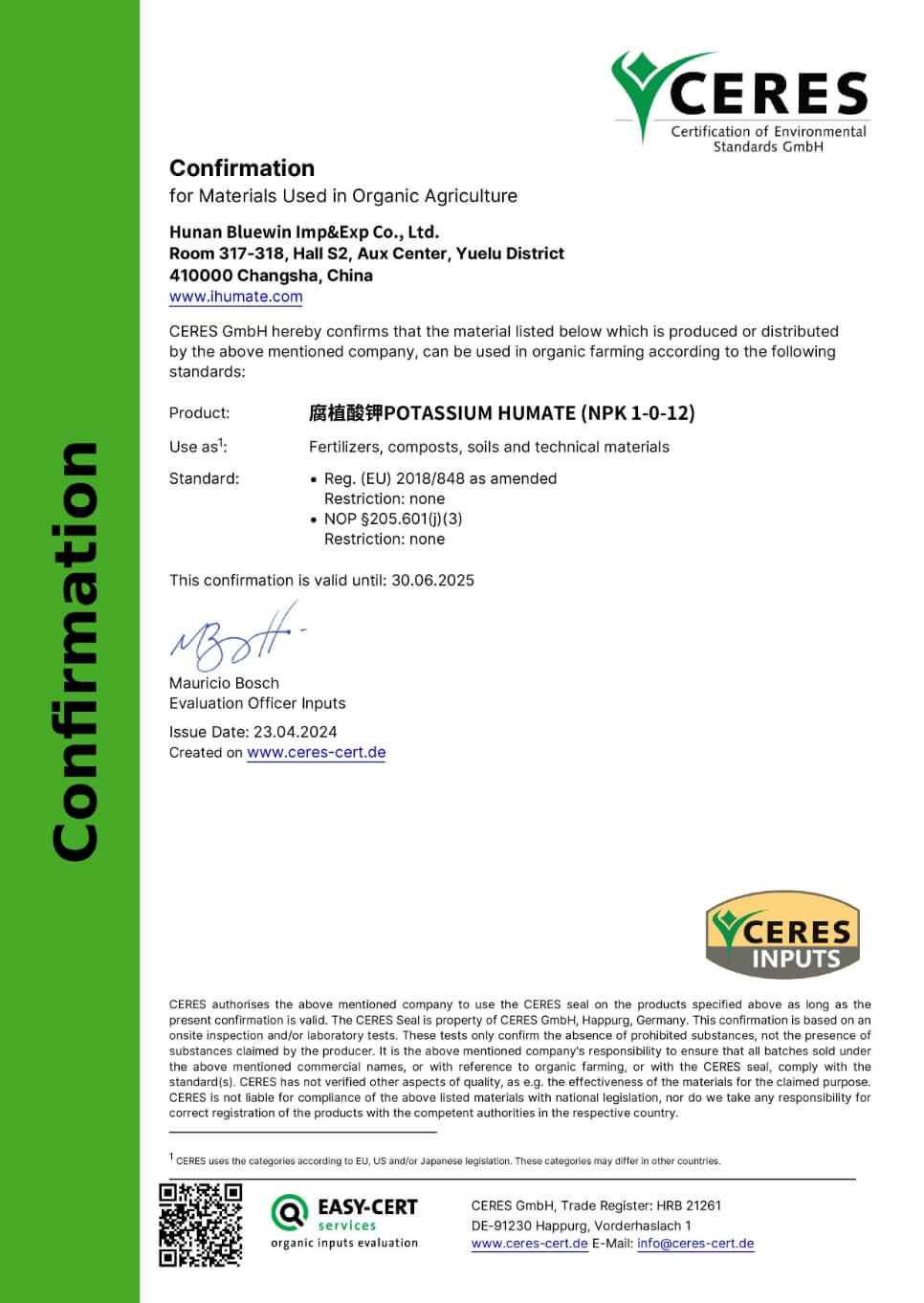
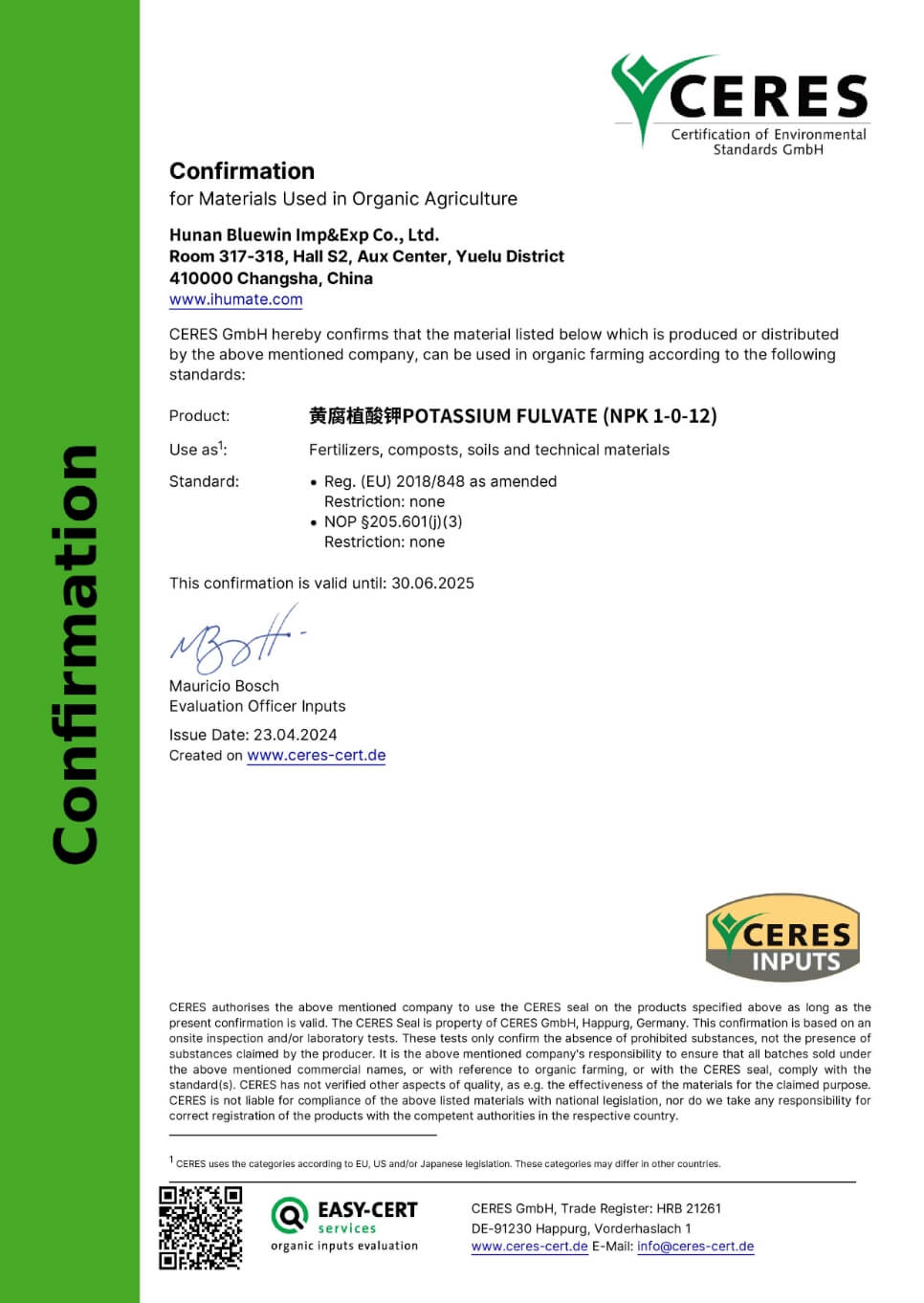
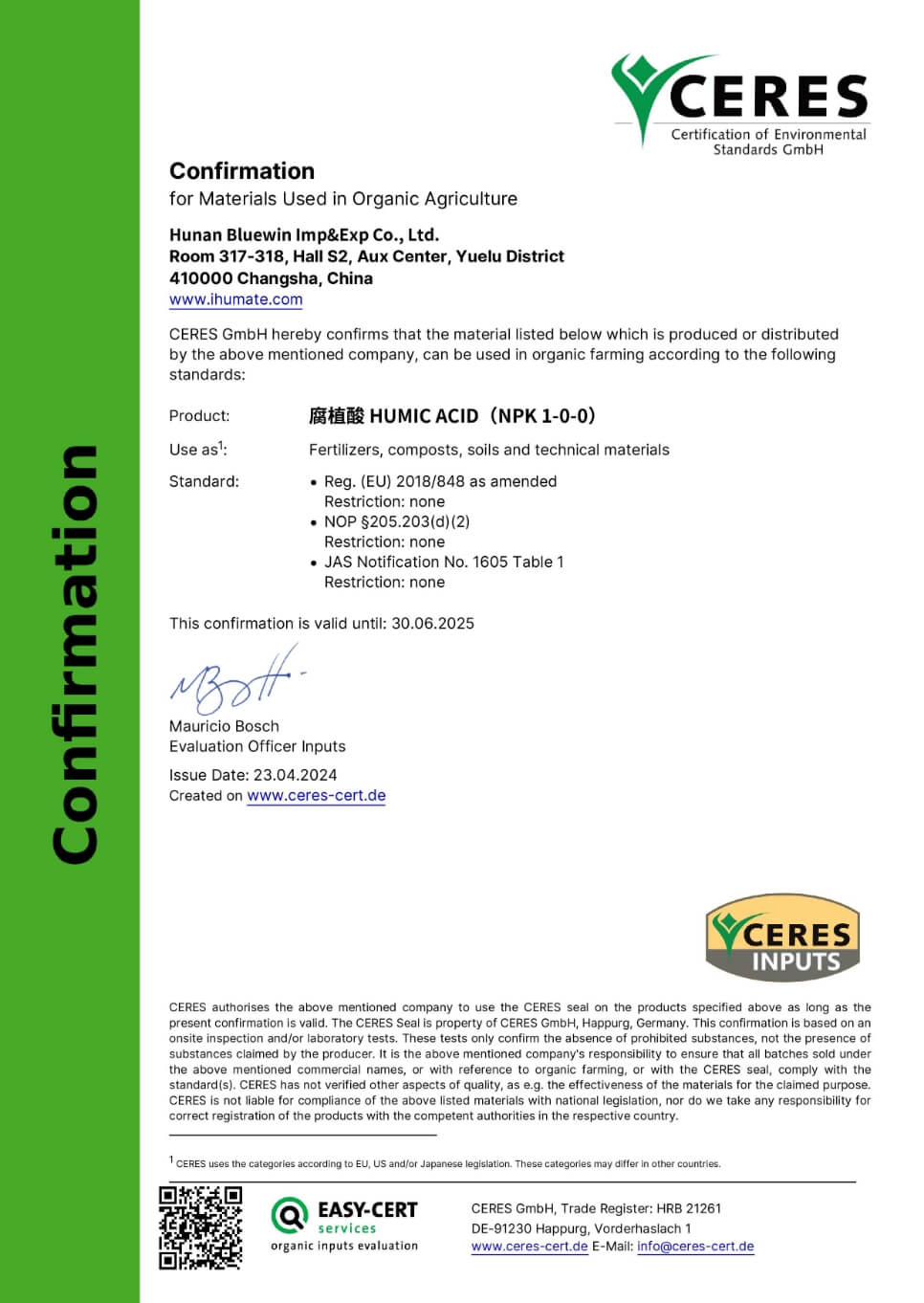
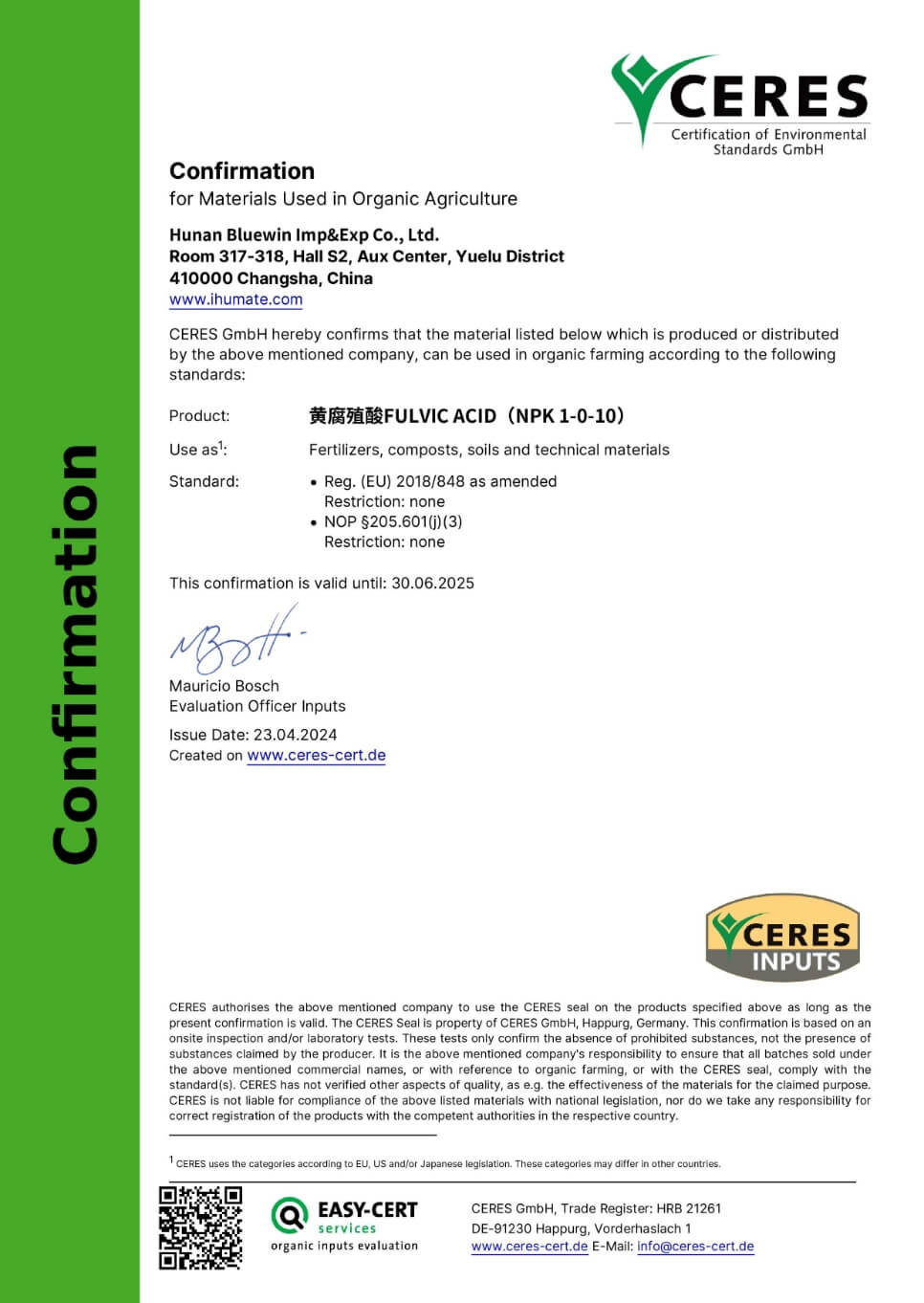
Ihumate is backed by globally recognized certifications.
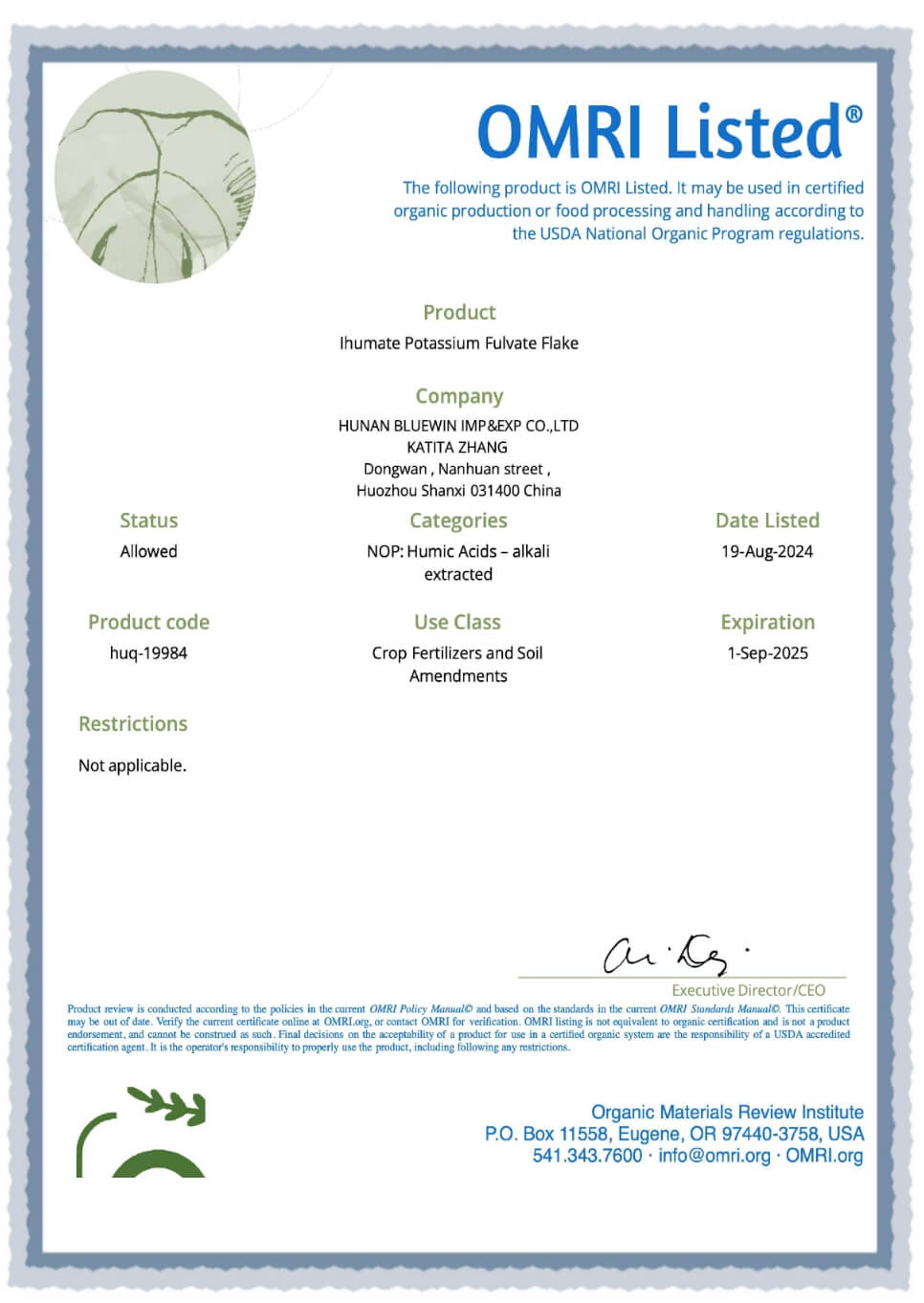
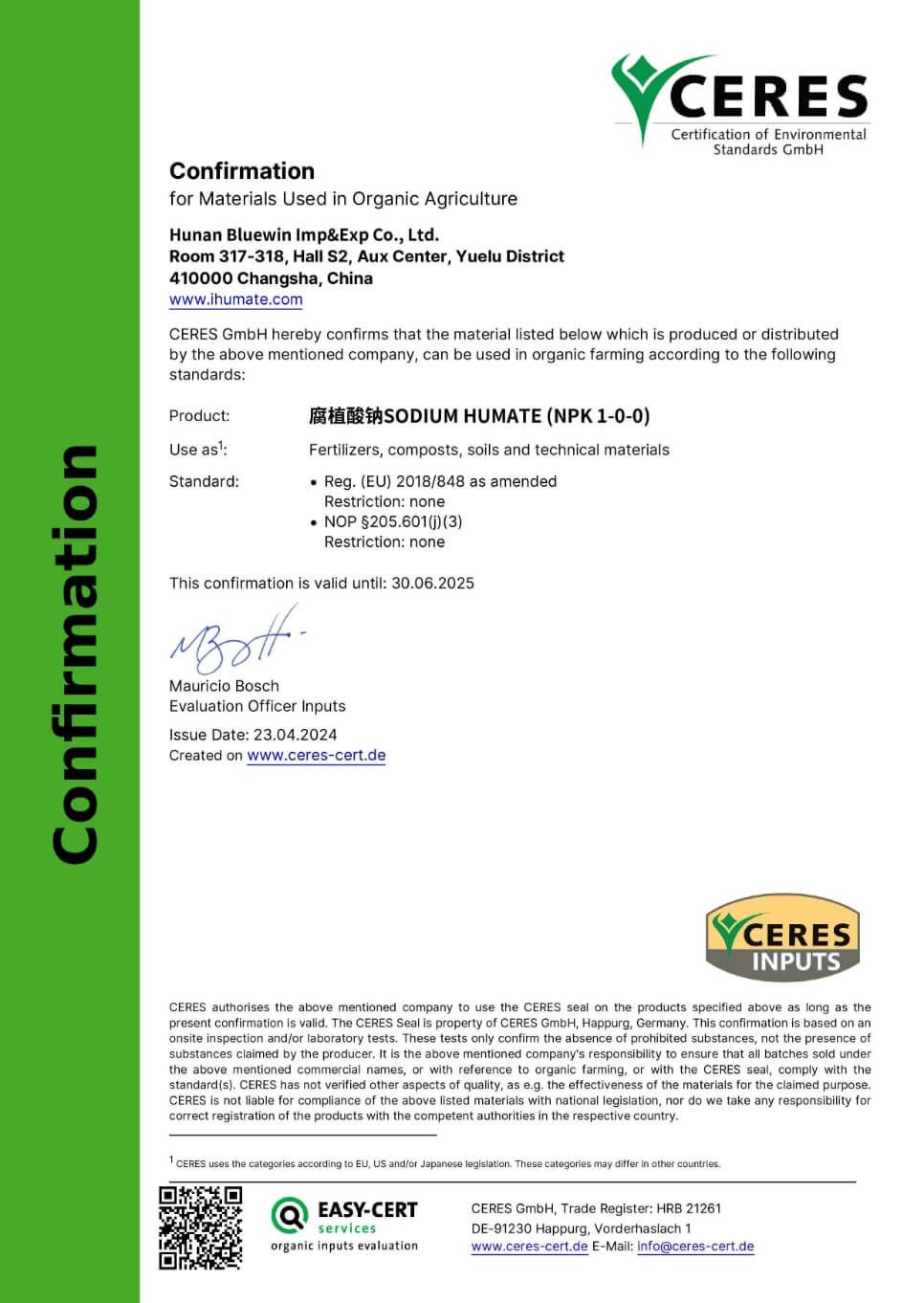
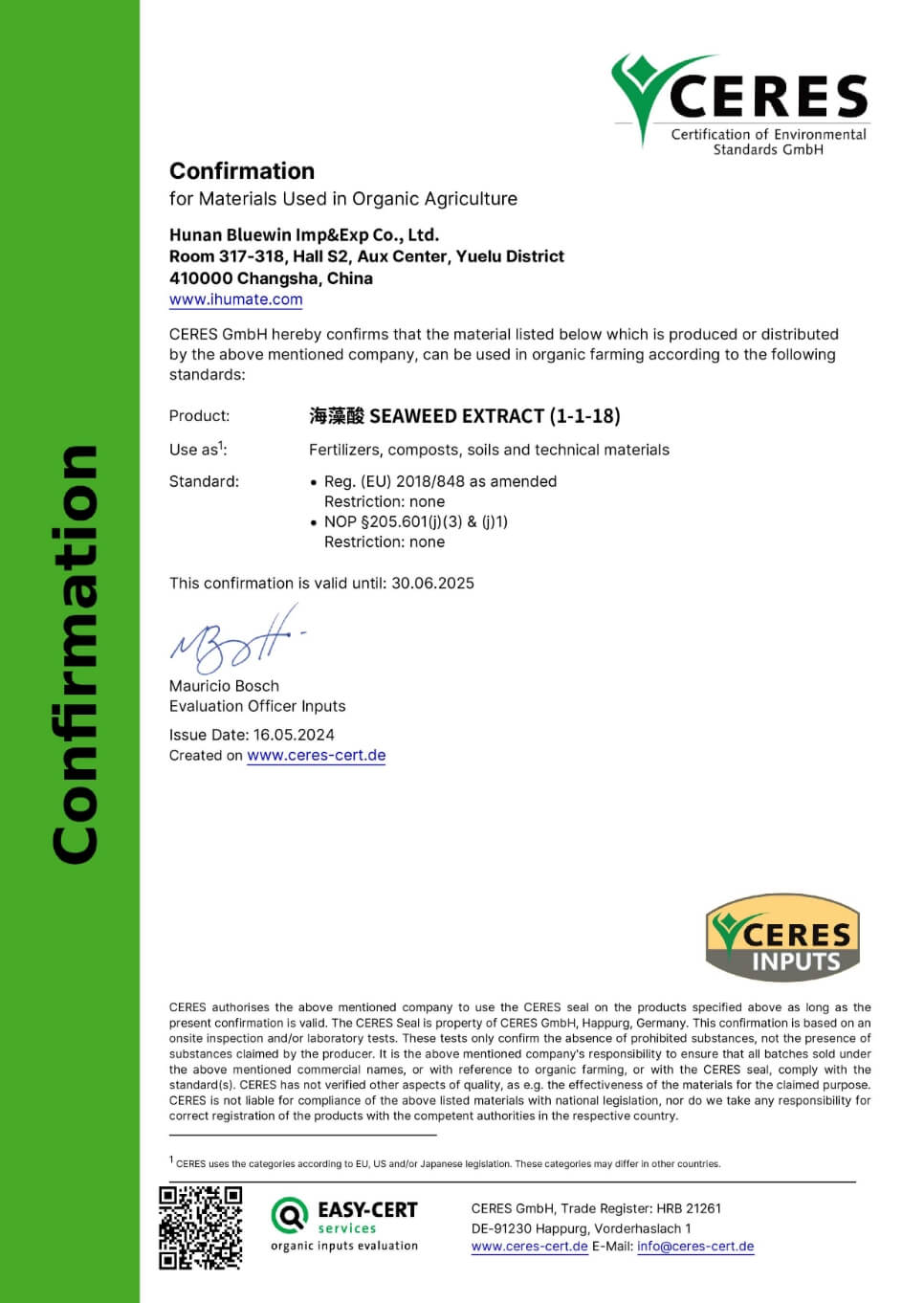
- 🏅 OMRI Listed – Approved for organic use (USDA/NOP standards)
- 🏅 CERES Certified – High-standard organic inputs for sustainable agriculture
- ✔ Excellent international production process with full batch traceability
- ✔ Meeting the strict demands of global distributors and formulators
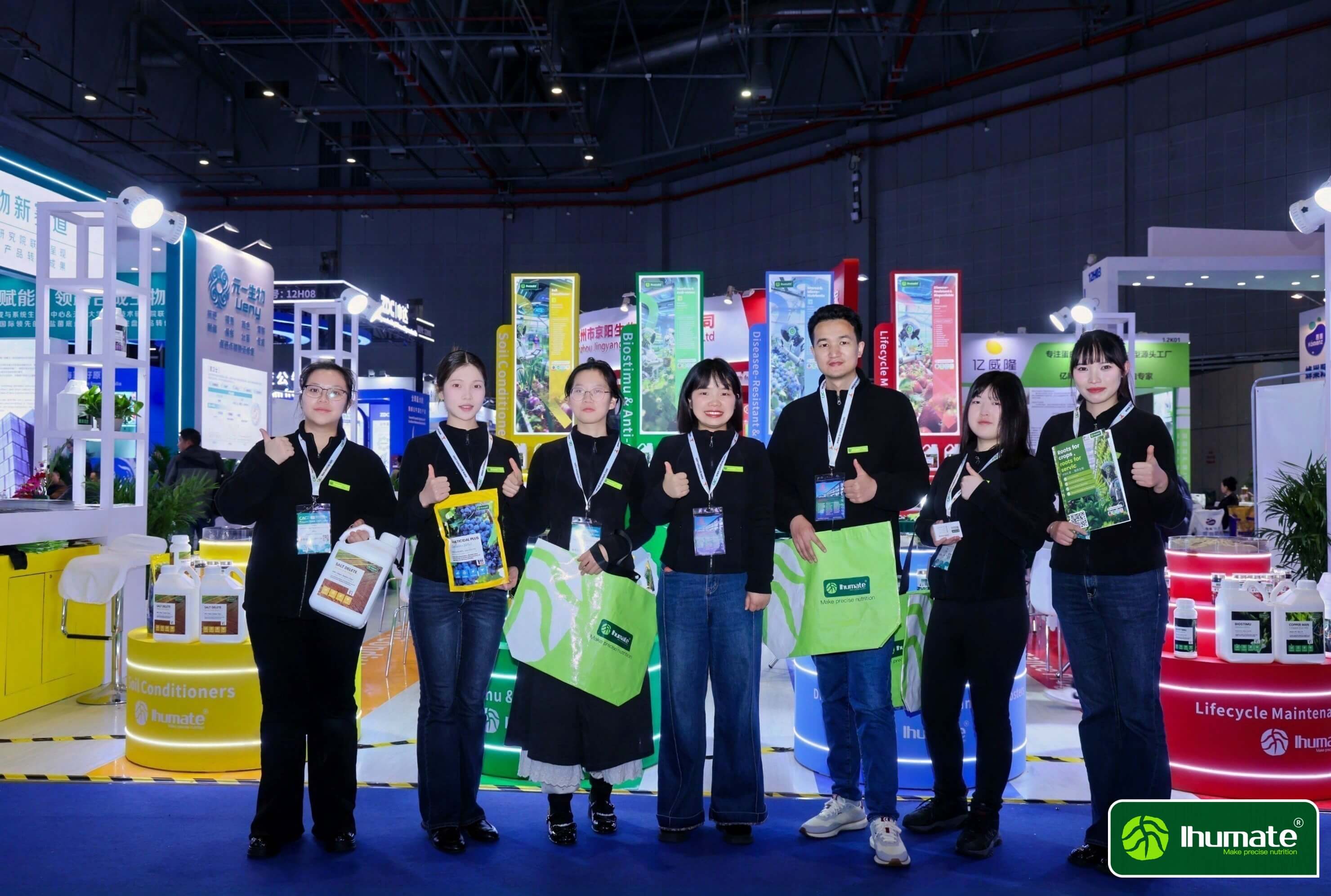
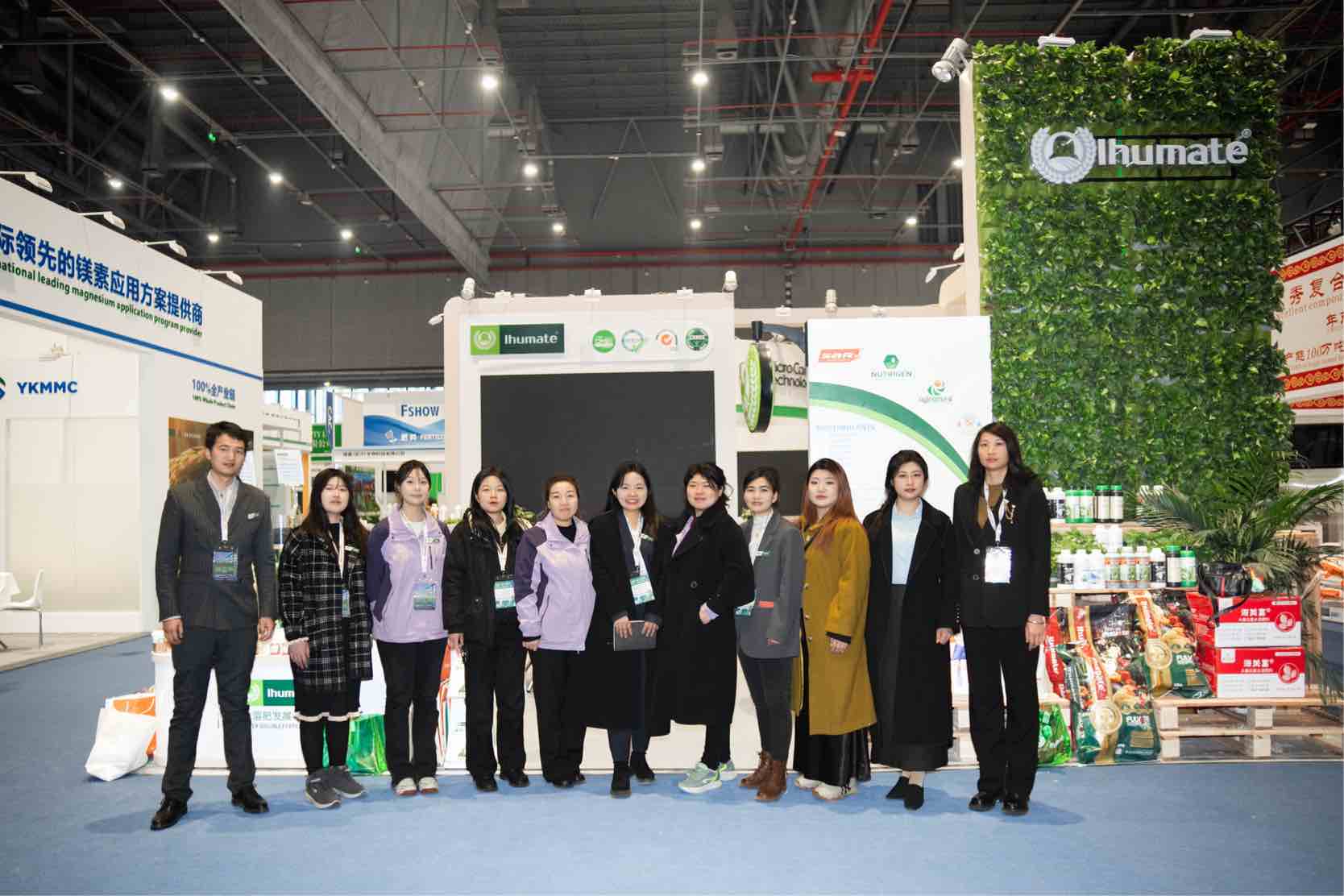
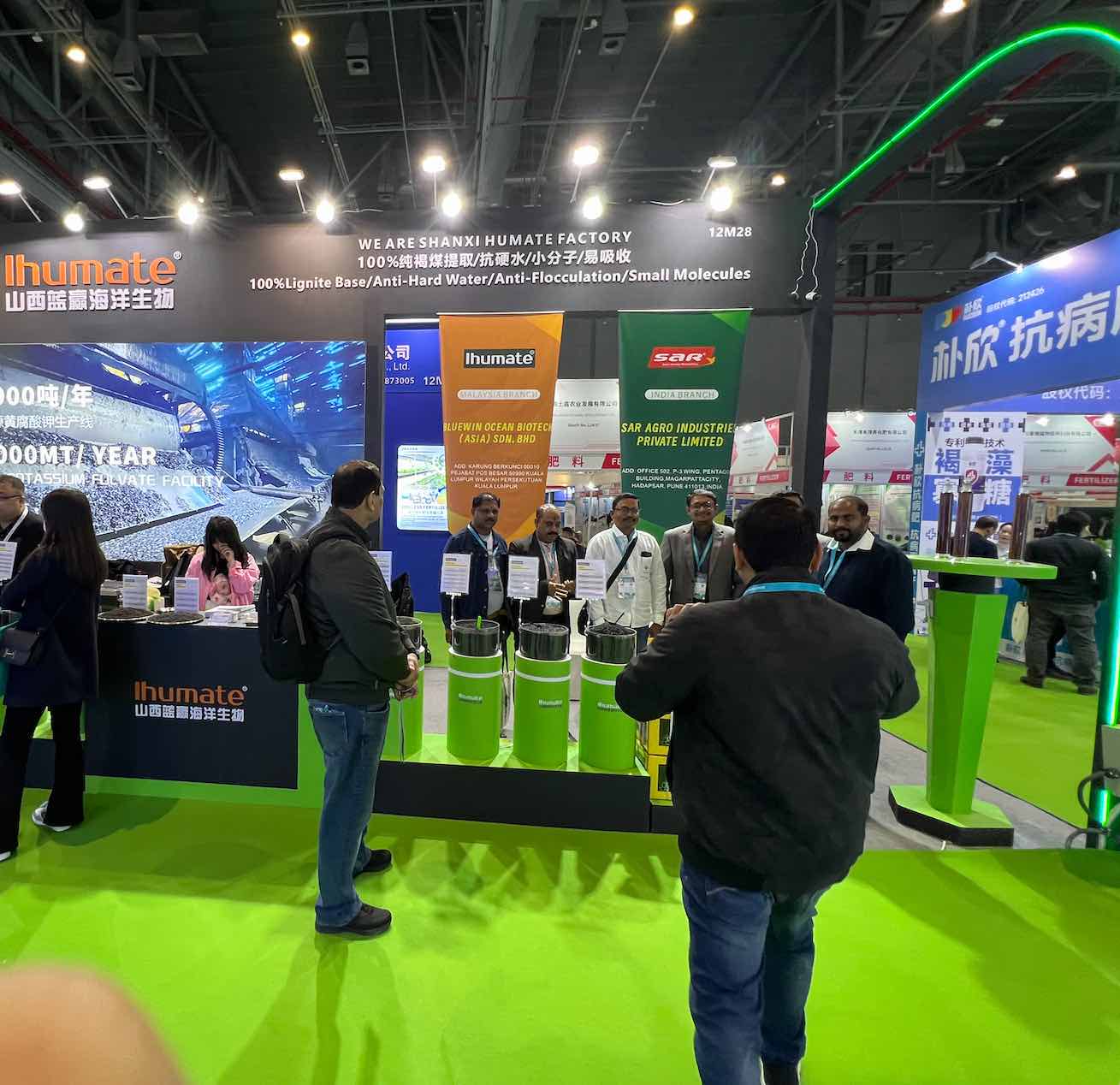
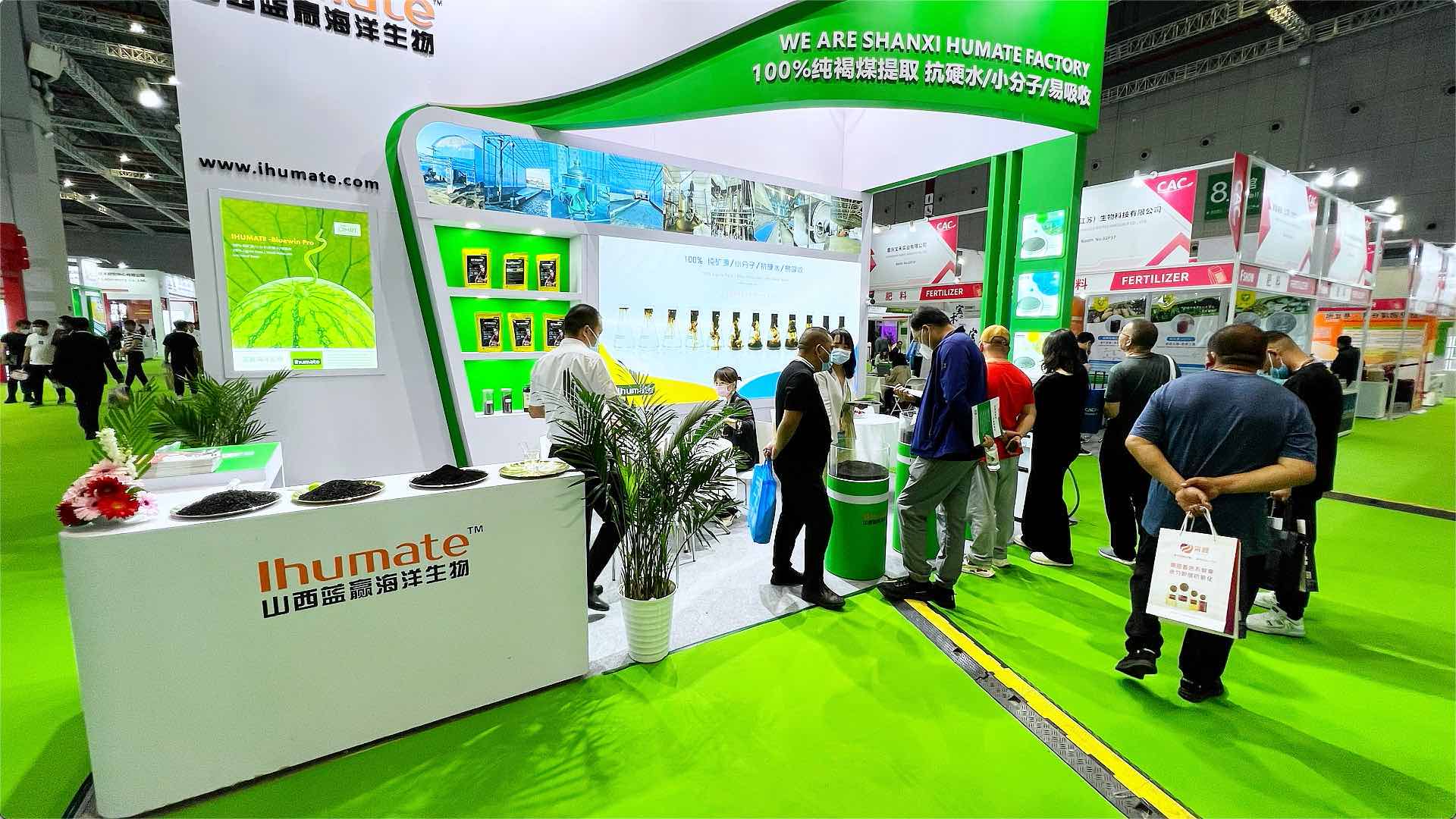
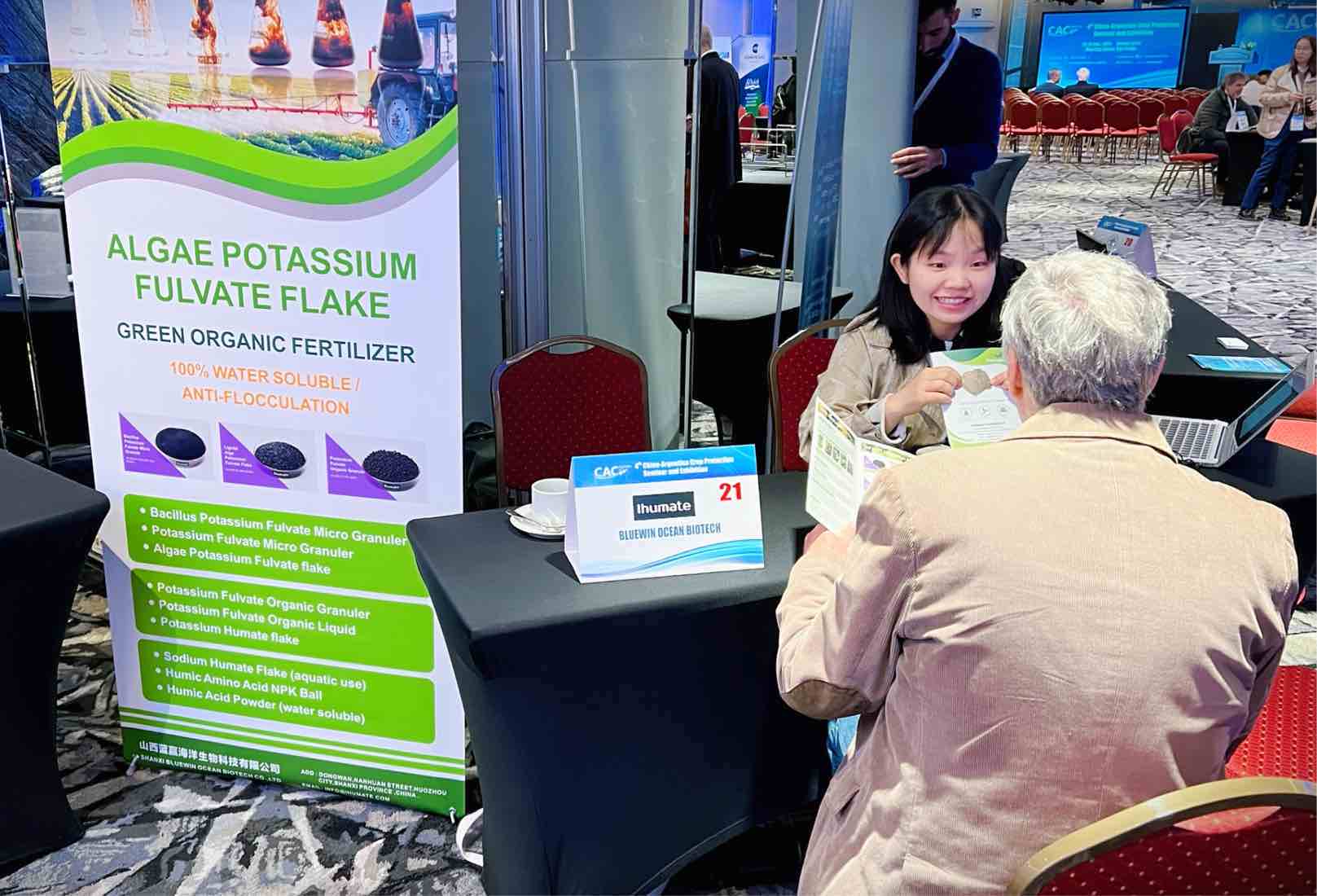
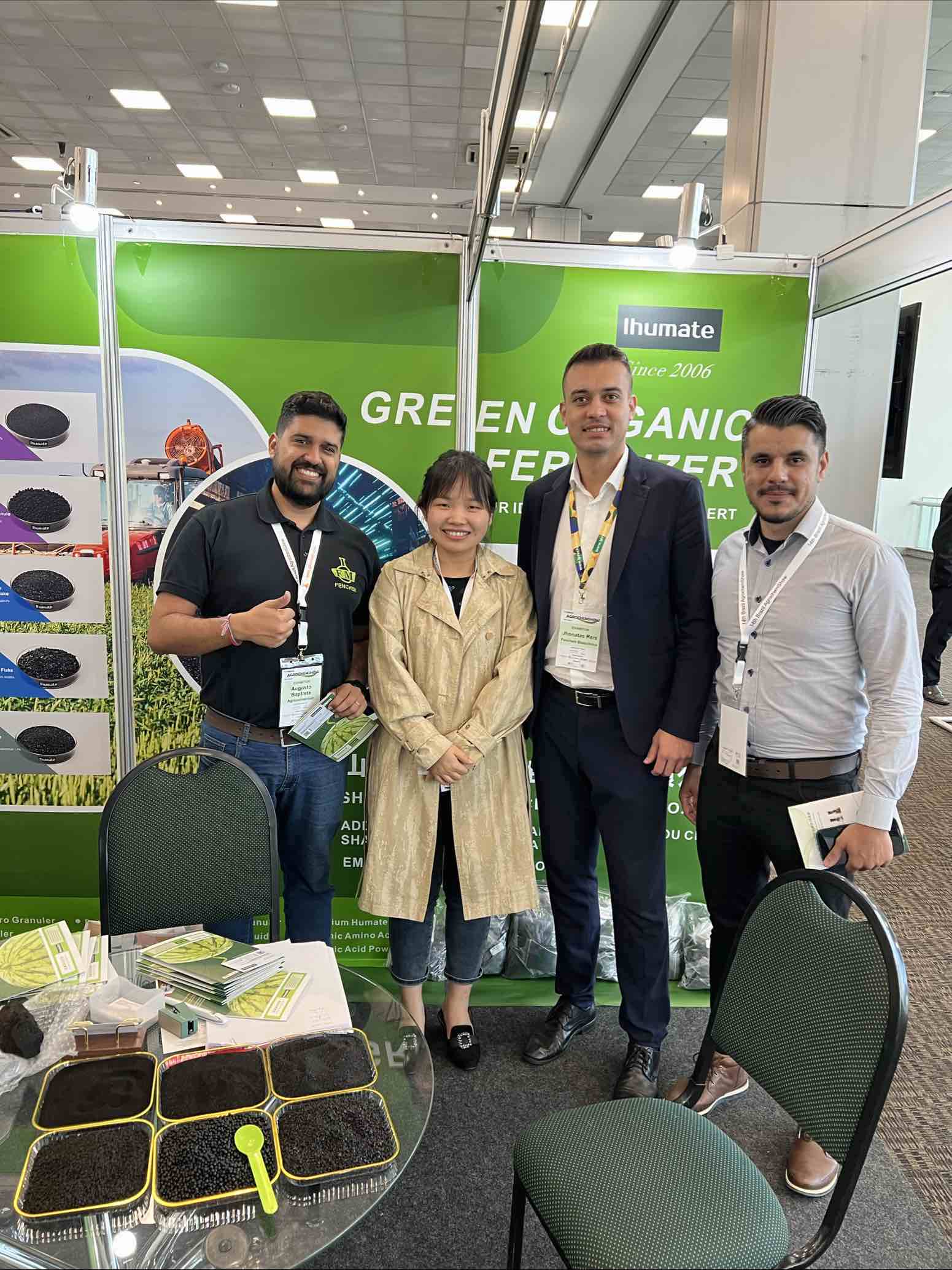
Ihumate Global Exhibition Videos
We showcase our Humic Acid, Seaweed, Liquid Fertilizer, and Bio-control series globally.
Join us at our 2026 exhibitions:
Event: Shanghai CAC (Fshow)
Booth: 12G05
Date: March 17-19, 2026
Address: No. 333 Songze Avenue, Qingpu District, Shanghai
Join us at our 2026 exhibitions:
Event: Shanghai CAC (Fshow)
Booth: 12G05
Date: March 17-19, 2026
Address: No. 333 Songze Avenue, Qingpu District, Shanghai
No. 64 Nangou, Chencun, Bailong Town, Huozhou City, Linfen City, Shanxi Province

© 2017 Shanxi Ihumate Biotech Co.,Ltd. All Rights Reserved | Privacy Policy | Powered by Ihumate