



Potassium Humate Liquid
- Density: 1:1.3
- Humic Acid: > 20%
- B, Fe, Mn, Zn, Cu, Mo, Ti, Se: > 2%
Reference price range:USD 500 - 1000
Potassium Humate Liquid
(HUMIMAX)
Liquid Potassium Humate for Root Development and Abiotic Stress Management
HUMIMAX is a liquid humic-acid biostimulant with more than 20% humic acid and more than 2% combined B, Fe, Mn, Zn, Cu, Mo, Ti and Se. It addresses slow root recovery after transplanting, fluctuating soil moisture and inconsistent nutrient uptake despite regular fertilization. The humic fraction and listed elements can be incorporated into fertigation and root-zone programs for fruit trees, vegetables, cereals and other high-value crops.
Humic substances can influence nutrient availability in the rhizosphere and support root elongation and lateral-root formation. A more active root system explores a larger soil volume for water and nutrients, helping crops maintain growth through heat, short dry spells or salinity fluctuations. The response varies with the humic source, soil conditions, rate and crop stage; use soil and leaf tests to interpret field results.
Apply HUMIMAX after transplant establishment, during vigorous growth or around the flowering-to-fruiting transition alongside irrigation and balanced fertilization. At these stages, its root-zone humic fraction and combined trace elements help connect root development with nutritional supply. Compare new root growth, leaf color and crop vigor with an untreated area to assess its value under local conditions.
Potassium Humate Liquid Specifications
| Technical Parameters | Detailed Specs | Testing Methods | Reference Standards |
|---|---|---|---|
| Density | 1:1.3 | Hydrometer Method / Volumetric Flask Weighing Method | NY/T 1973 |
| Humic Acid | > 20% | Dry Basis | GB/T 11957 |
| B, Fe, Mn, Zn, Cu, Mo, Ti, Se | > 2% | - | - |
Potassium Humate Liquid - Introduction Video
- Humic acid and root development
- Support under drought and salinity stress
- More effective root-zone nutrient management
COA, TDS, MSDS & HM Test Reports
Certificate of Analysis (COA)
Certificate of Analysis: Potassium Humate Liquid
Technical Data Sheet (TDS)
TDS: Potassium Humate Liquid
Safety Data Sheet (MSDS)
MSDS: Potassium Humate Liquid
Heavy Metal Test Report
Heavy Metal Test Report: Potassium Humate Liquid
Download Support
Need custom documents or specific test results?
Frequently Asked Questions


1
How can HUMIMAX support root growth?
Humic substances can support root elongation and lateral-root formation. Distribute the product through the active root zone and maintain aeration and suitable moisture.
2
When is it useful in stress management?
Consider application before forecast heat, short drought or salinity changes as part of an irrigation plan, and support root recovery once conditions improve.
3
Can HUMIMAX be mixed with fertilizer or pesticides?
Check both labels, perform a jar test and validate on a small area before wider use.
4
Are you a trading company or a manufacturer?
We are a professional manufacturing enterprise. Our modern factory is located in Huozhou, Linfen, Shanxi, China. With an annual capacity of 500,000 tons, we invite global partners to visit our facility.
5
How do you perform quality control?
6
Do you provide samples?
7
What are the payment terms?
8
How can I track my shipment after payment?
9
What is the Minimum Order Quantity (MOQ)?
10
Can you customize packaging or print our logo?
11
How long is the delivery time?
More questions about our products?
Application & Dosage: Potassium Humate Liquid
Use in the root zone after transplant establishment, during active growth and around the flowering-to-fruiting transition. Where heat, short drought or salinity changes are predictable, coordinate application with the irrigation plan. The table gives current reference rates per hectare; dilute thoroughly and distribute evenly. Adjust frequency to the product label, soil conditions and observed crop response.
Fertigation and soil drench
- Root establishment:Apply evenly with irrigation when root growth resumes; observe new roots and foliage. Wet very dry soil first and drain waterlogged ground before application.
- Flowering and fruit nutrition:Apply in split doses alongside basal fertilizer from post-bloom to young fruit or during fruit enlargement, guided by soil and leaf tests.
Stress management and mixing
- Heat, drought and salinity fluctuations:Where possible, apply ahead of a predictable stress period alongside irrigation. Continue to manage water, drainage and salinity and monitor root and leaf recovery.
- Compatibility check:Read both labels and perform a jar test before tank mixing. Trial a small area and flush drip lines with clean water after application.
Application Ratio Scheme
| Crop Name | Growth Stage | Application Ratio |
|---|---|---|
| Rice | Seedling | 3–5 L/ha |
| Grain filling | 3–5 L/ha | |
| Mango/loquat | Fruit enlargement | 4–6 L/ha |
| Longan/olive | Budbreak | 5–8 L/ha |
| Fruit enlargement | 6–10 L/ha | |
| Blueberry/raspberry | Before and after flowering | 4–6 L/ha |
| Cherry tomato | Early flowering | 4–6 L/ha |
| Leaf lettuce | Active growth | 3–5 L/ha |
| Taro | Tuber enlargement | 5–8 L/ha |
Product Advantages: Potassium Humate Liquid
HUMIMAX works through the root zone: supporting new roots and nutrient use, then helping crops cope with changing field conditions as part of an integrated program.
1
Humic acid and root development
Studies of humic substances have observed greater root elongation and lateral-root emergence. Delivering the product evenly to the active root zone after transplanting or during root renewal can support a wider absorbing root system. First correct waterlogging, poor aeration or excessive salinity where these restrict roots; then assess the crop response.
2
Support under drought and salinity stress
Root development and rhizosphere nutrition influence how crops respond to water shortage and changing salinity. Humic acid can form part of an abiotic-stress biostimulant program to support water uptake and physiological recovery. Schedule use ahead of predictable heat or short droughts where possible, while continuing irrigation, drainage and salt management.
3
More effective root-zone nutrient management
Humic functional groups interact with some soil nutrients and can complement their availability near roots. Combined with split fertilization and steady irrigation, this may help close the gap between fertilizer applied and nutrients taken up. Results vary with soil pH, organic matter and water quality; adjust the program using soil and leaf analysis.
4
Combined trace element supplementation
The declared B, Fe, Mn, Zn, Cu, Mo, Ti and Se exceed 2% in total. This allows inclusion in a test-guided micronutrient program before flowering, during early fruit growth or active vegetative growth. Crop demand differs by element, and the combined percentage does not represent the concentration of each individual element.
5
Liquid delivery through fertigation
Dilute as directed by the product label and distribute evenly through drip irrigation or soil drench. Timing applications around establishment, root renewal and fruit enlargement connects humic-acid input with existing water and fertilizer operations. Check filtration and run a jar test before tank mixing with fertilizers or pesticides.
Certifications: Potassium Humate Liquid
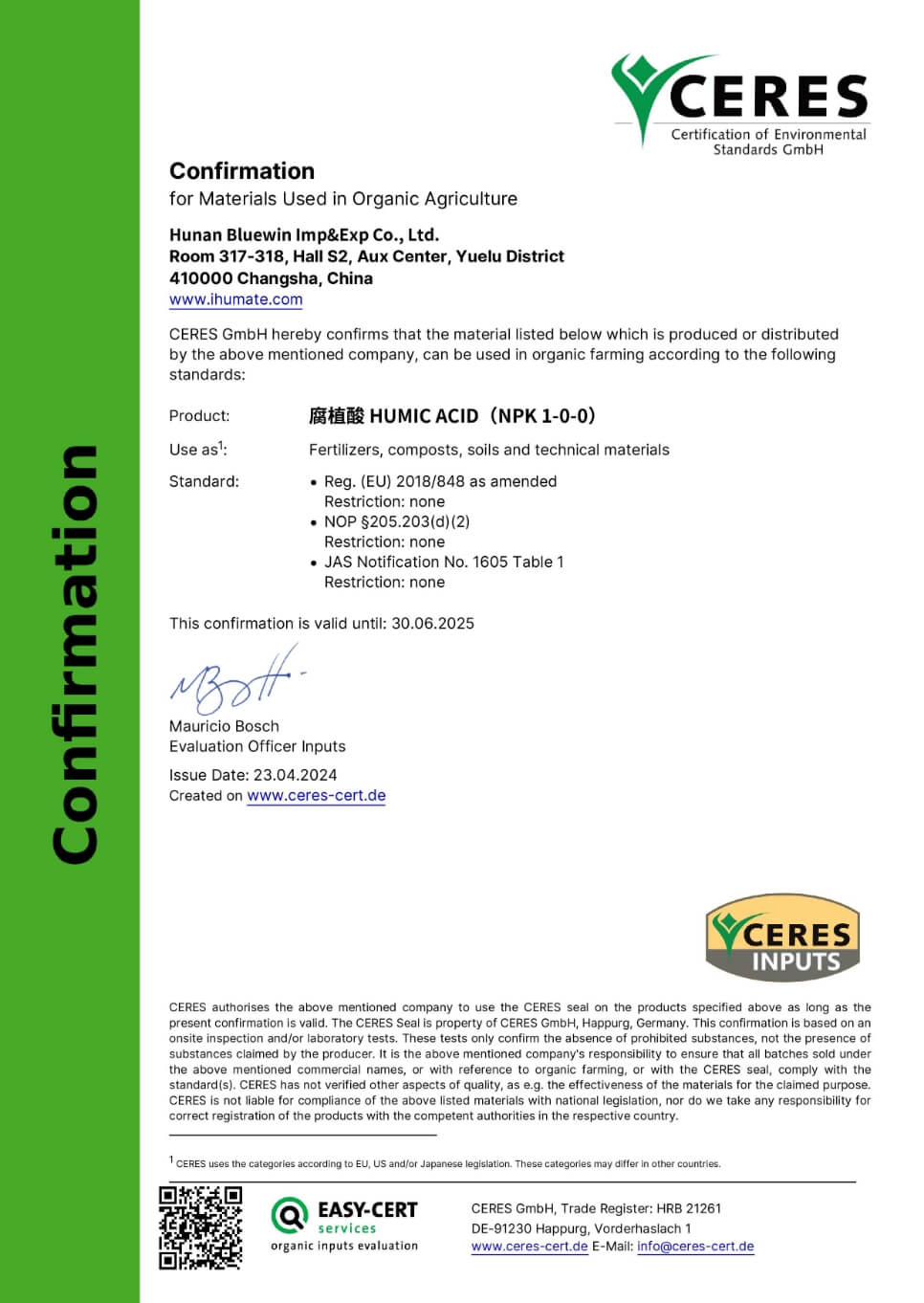
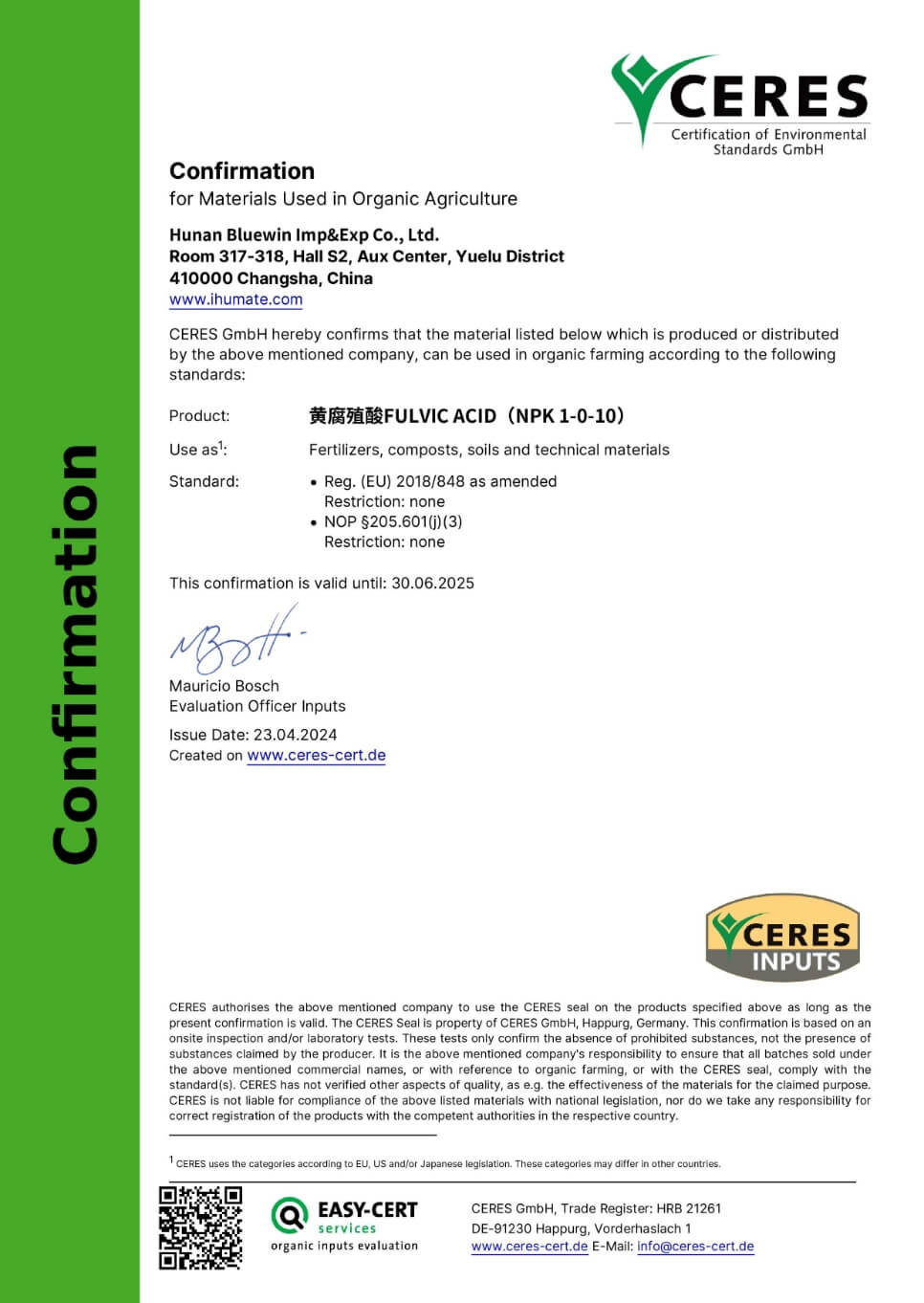
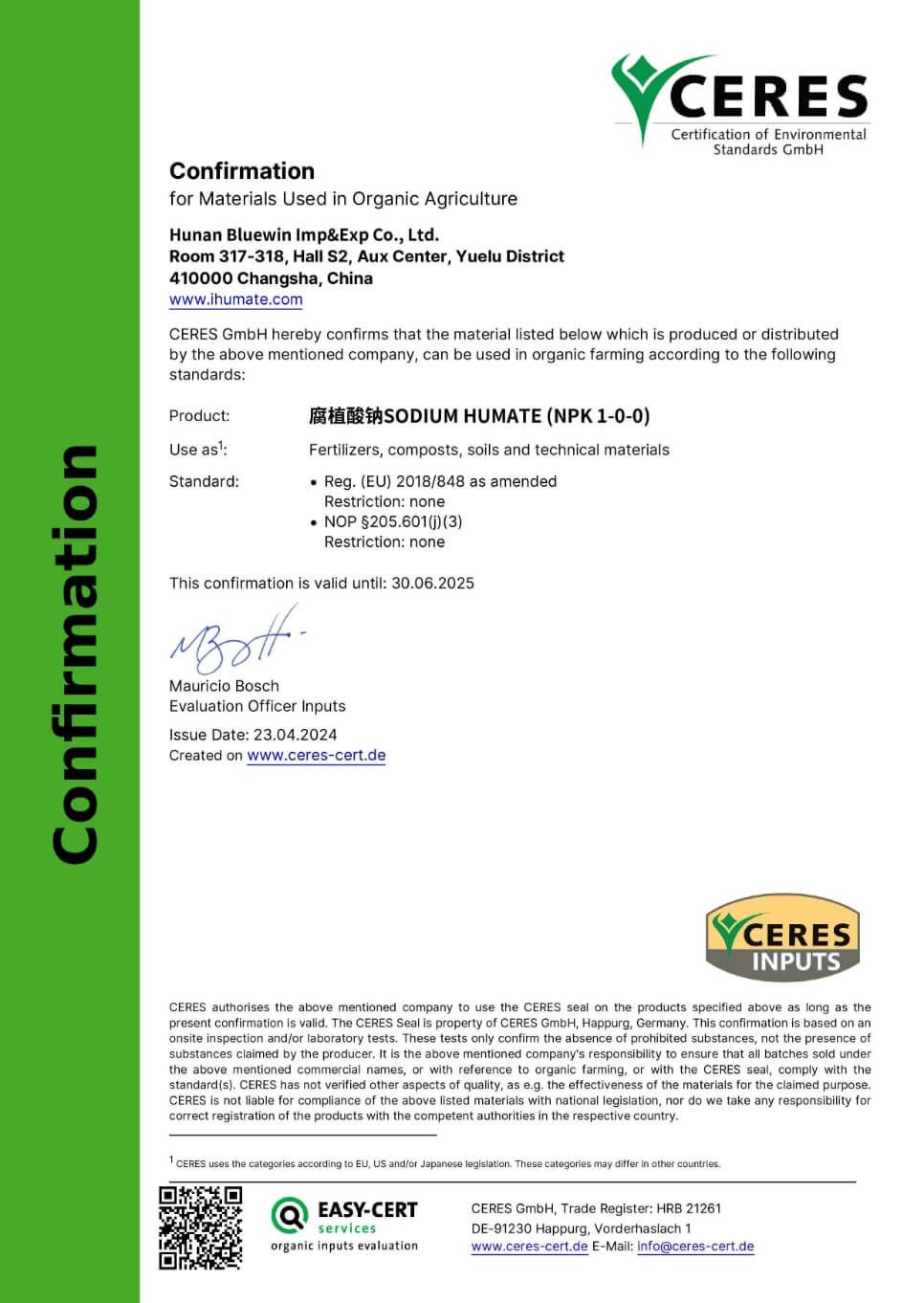
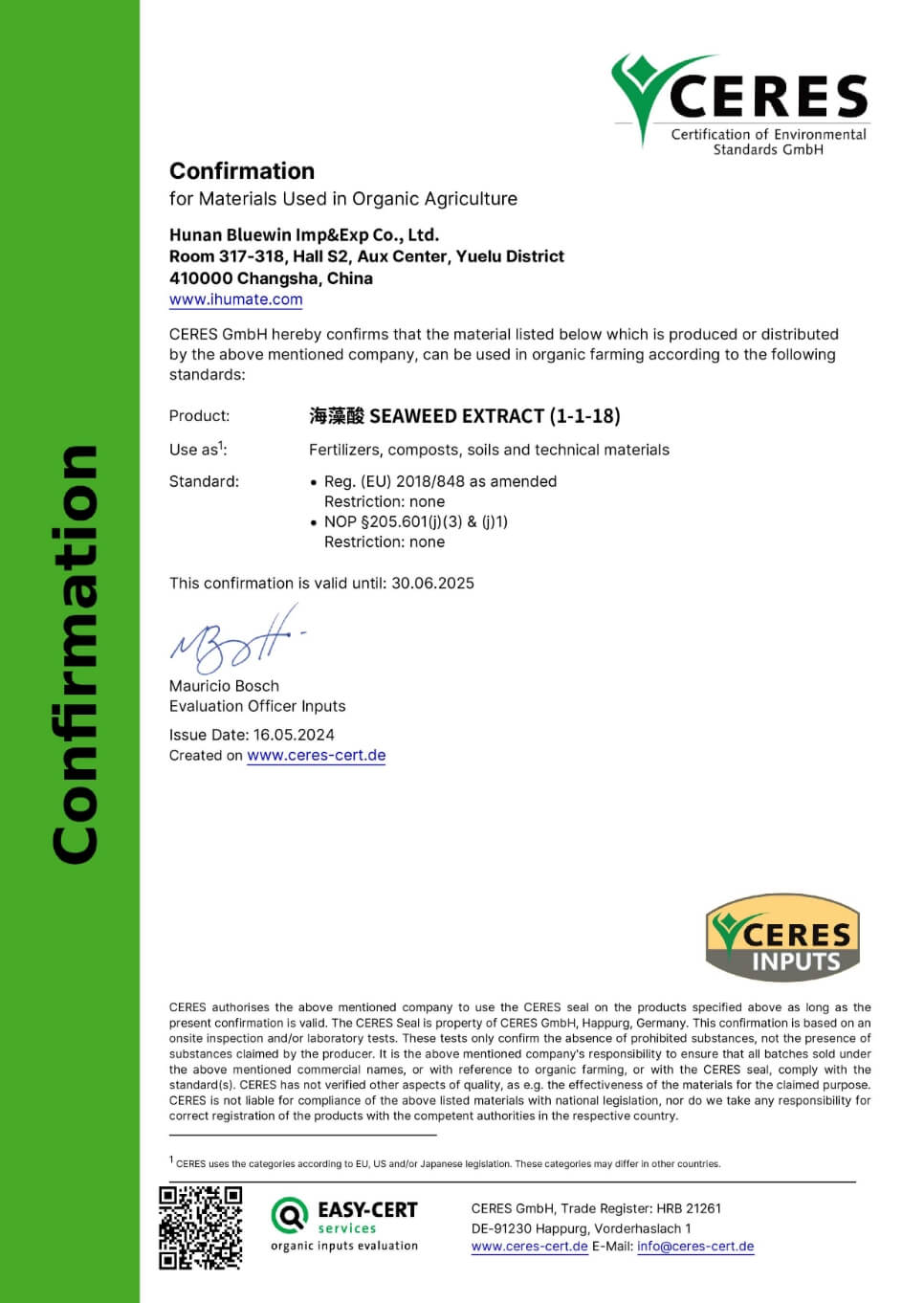
Ihumate is backed by globally recognized certifications.
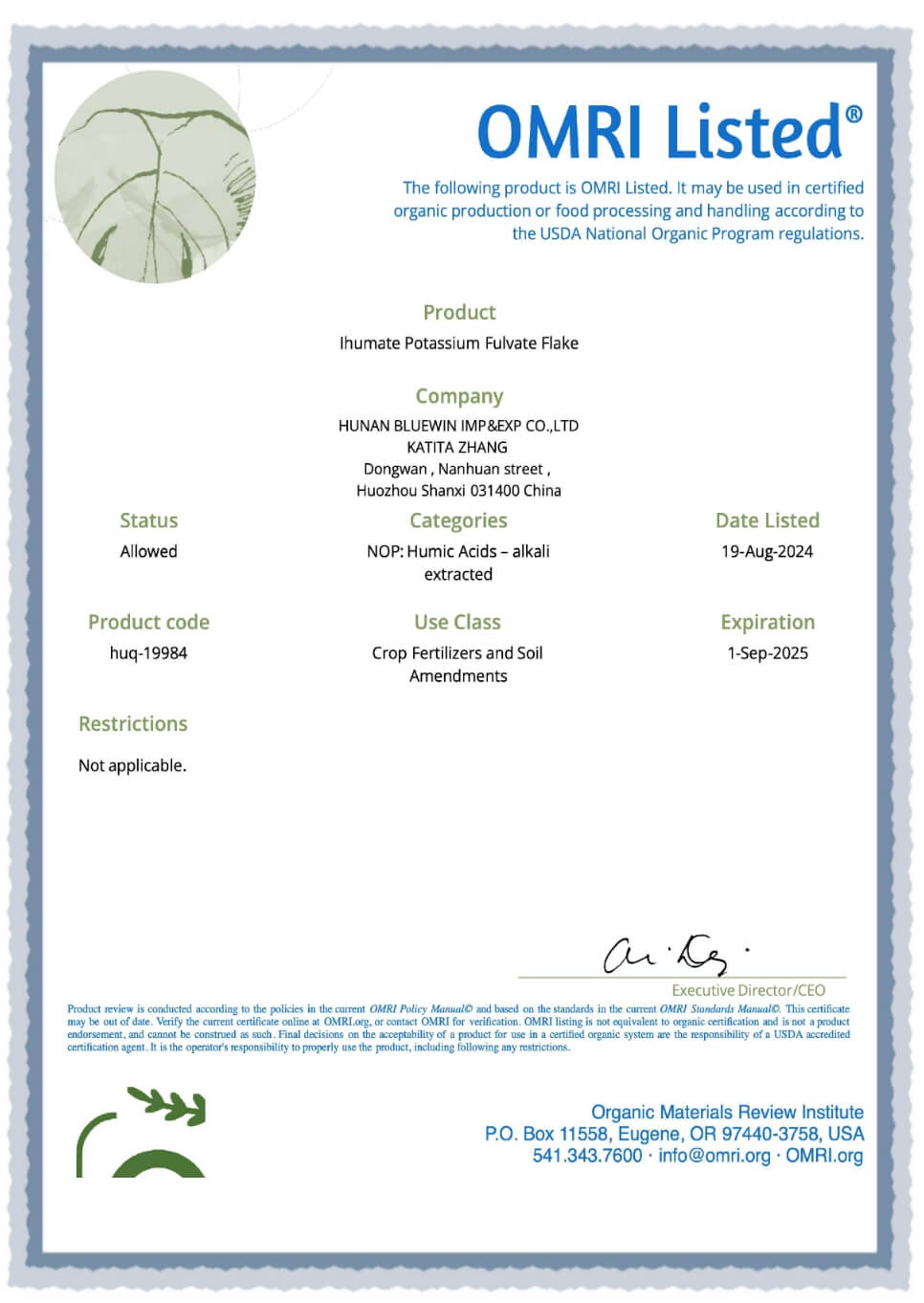
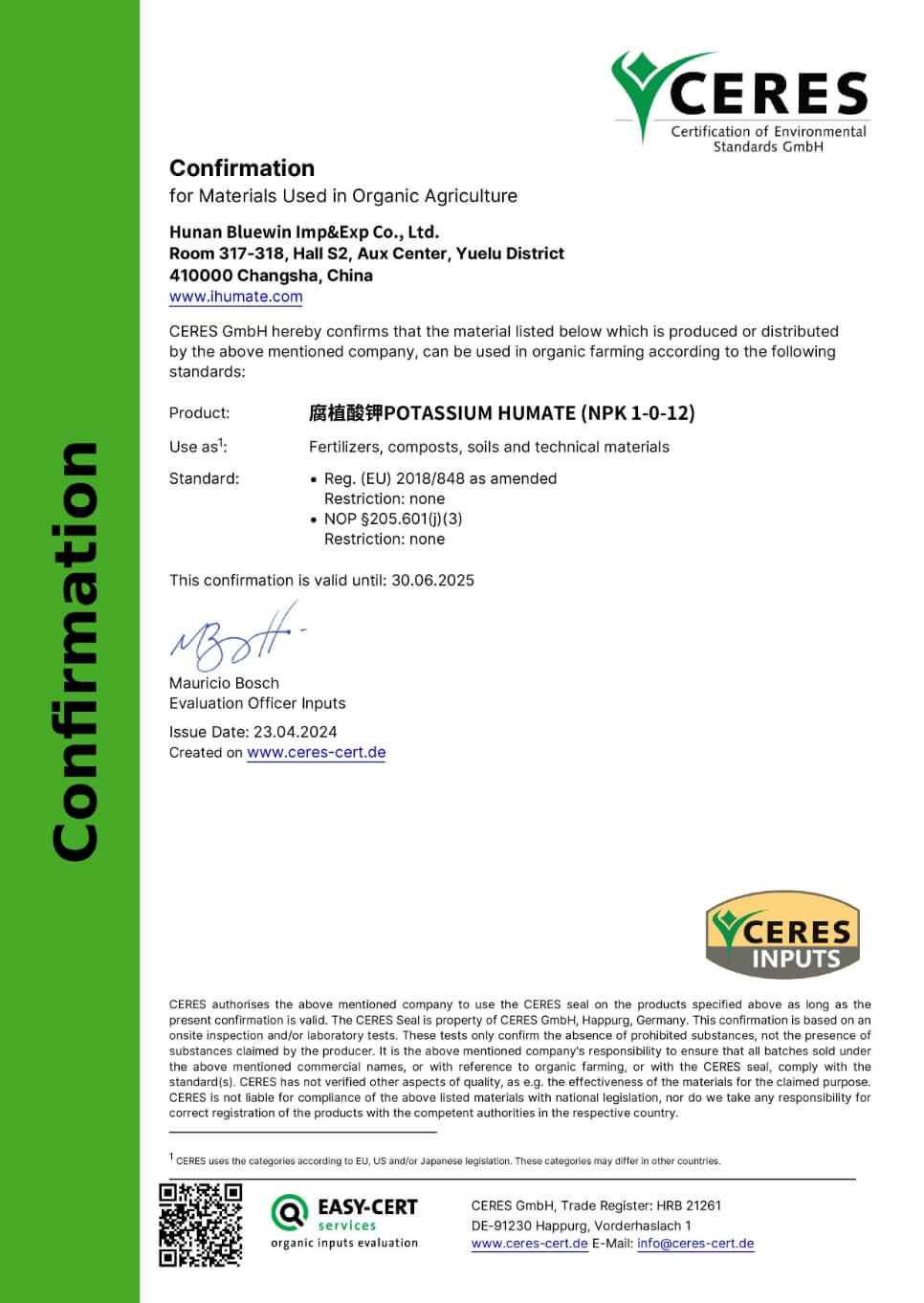
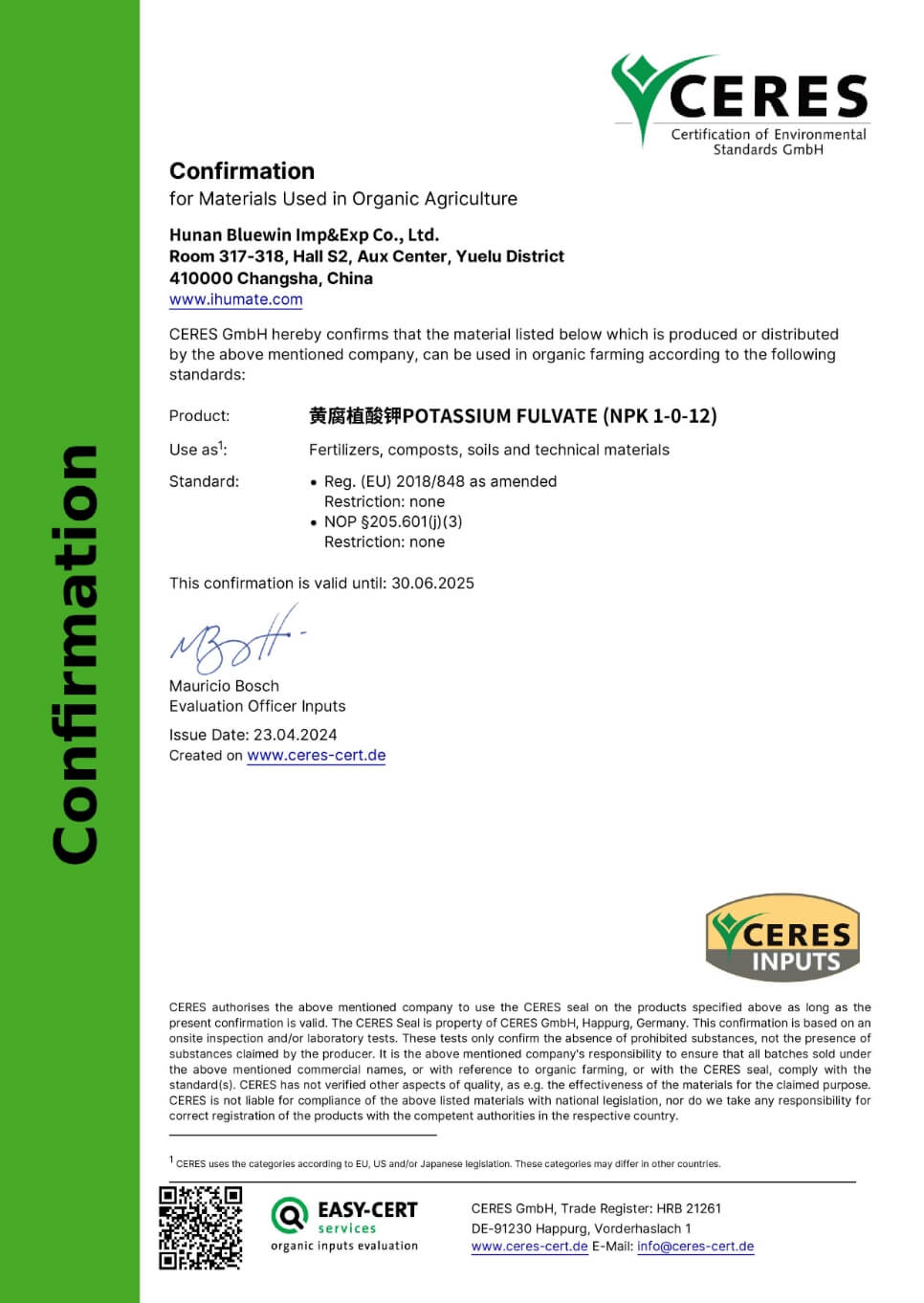
- 🏅 OMRI Listed – Approved for organic use (USDA/NOP standards)
- 🏅 CERES Certified – High-standard organic inputs for sustainable agriculture
- ✔ Excellent international production process with full batch traceability
- ✔ Meeting the strict demands of global distributors and formulators
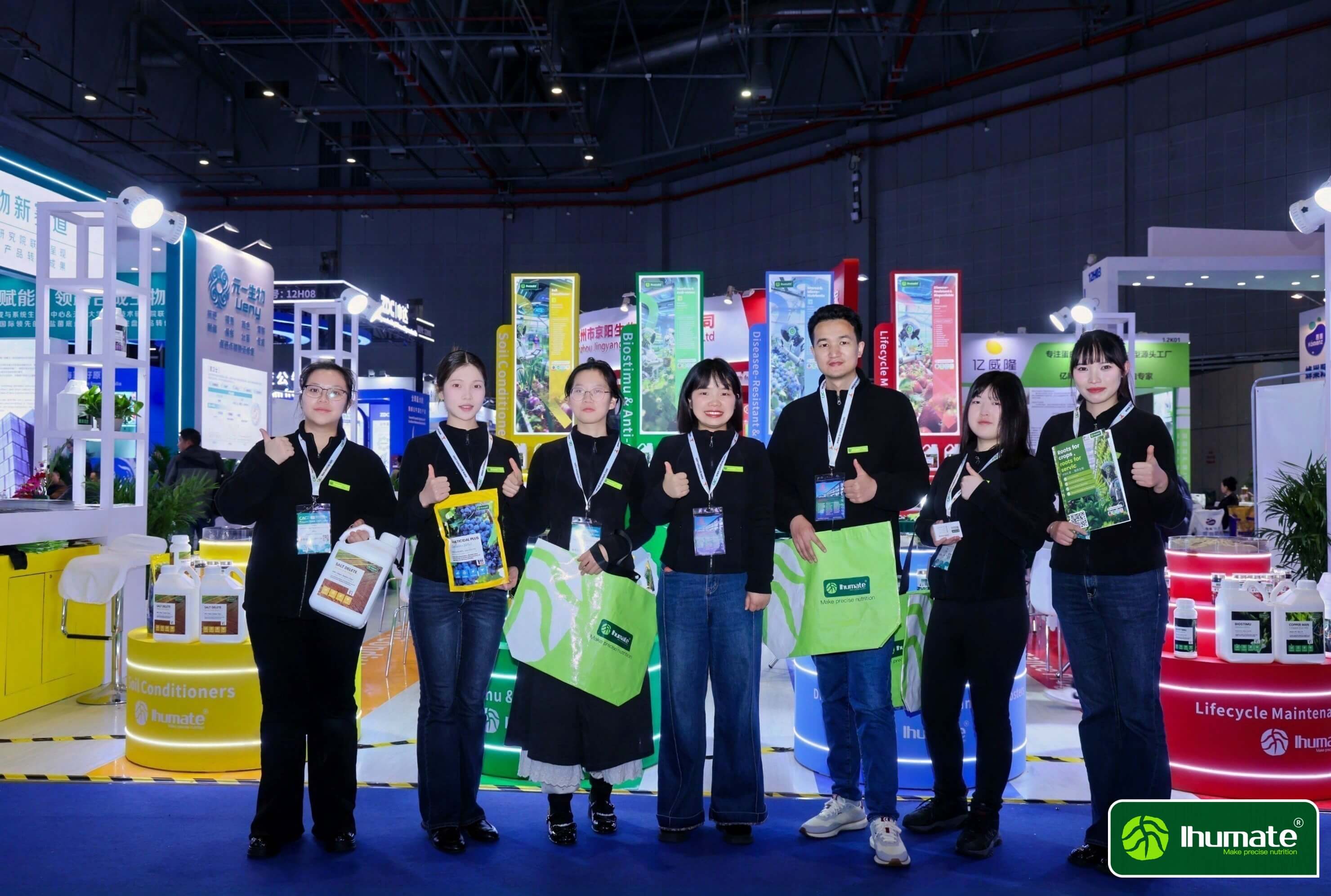
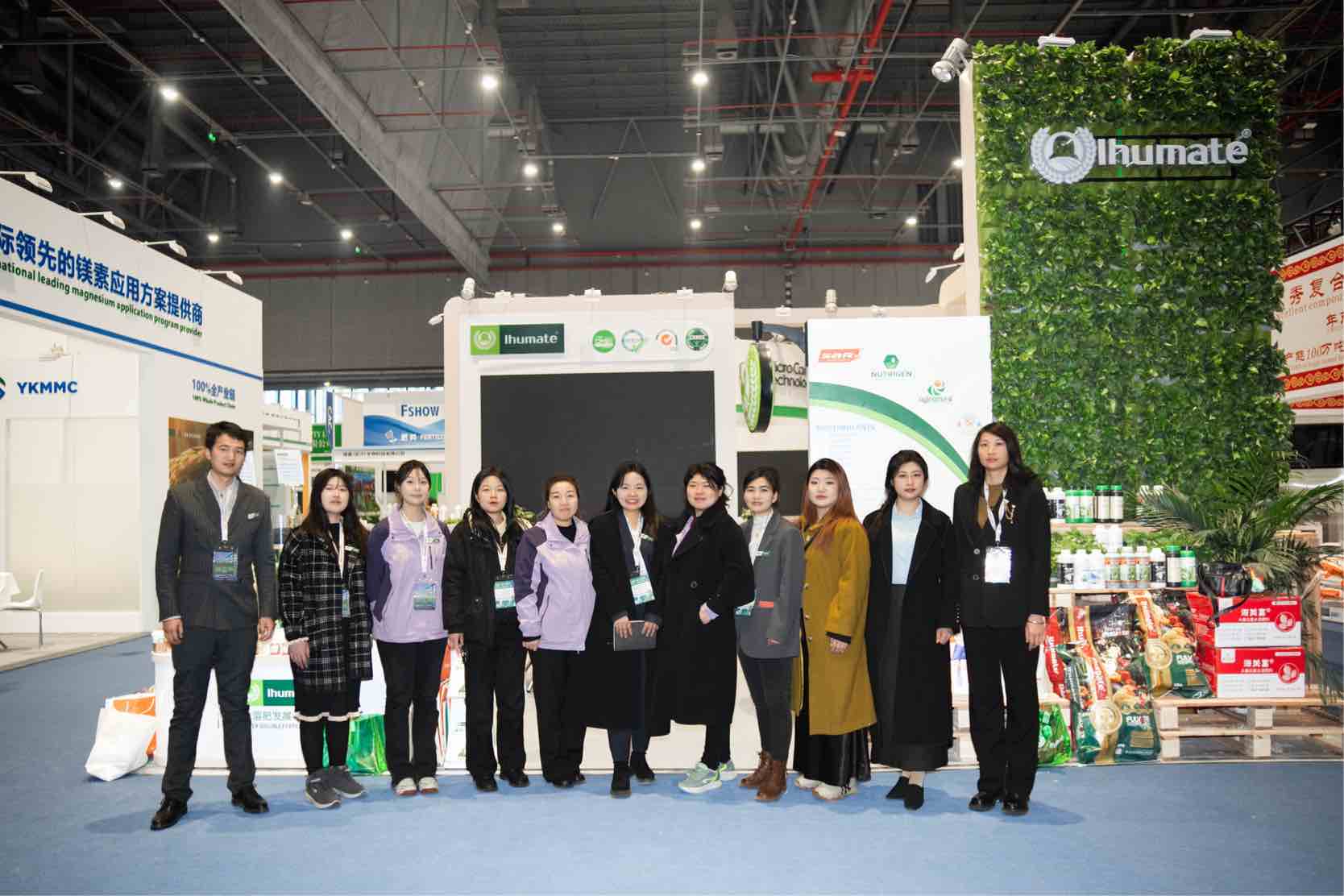
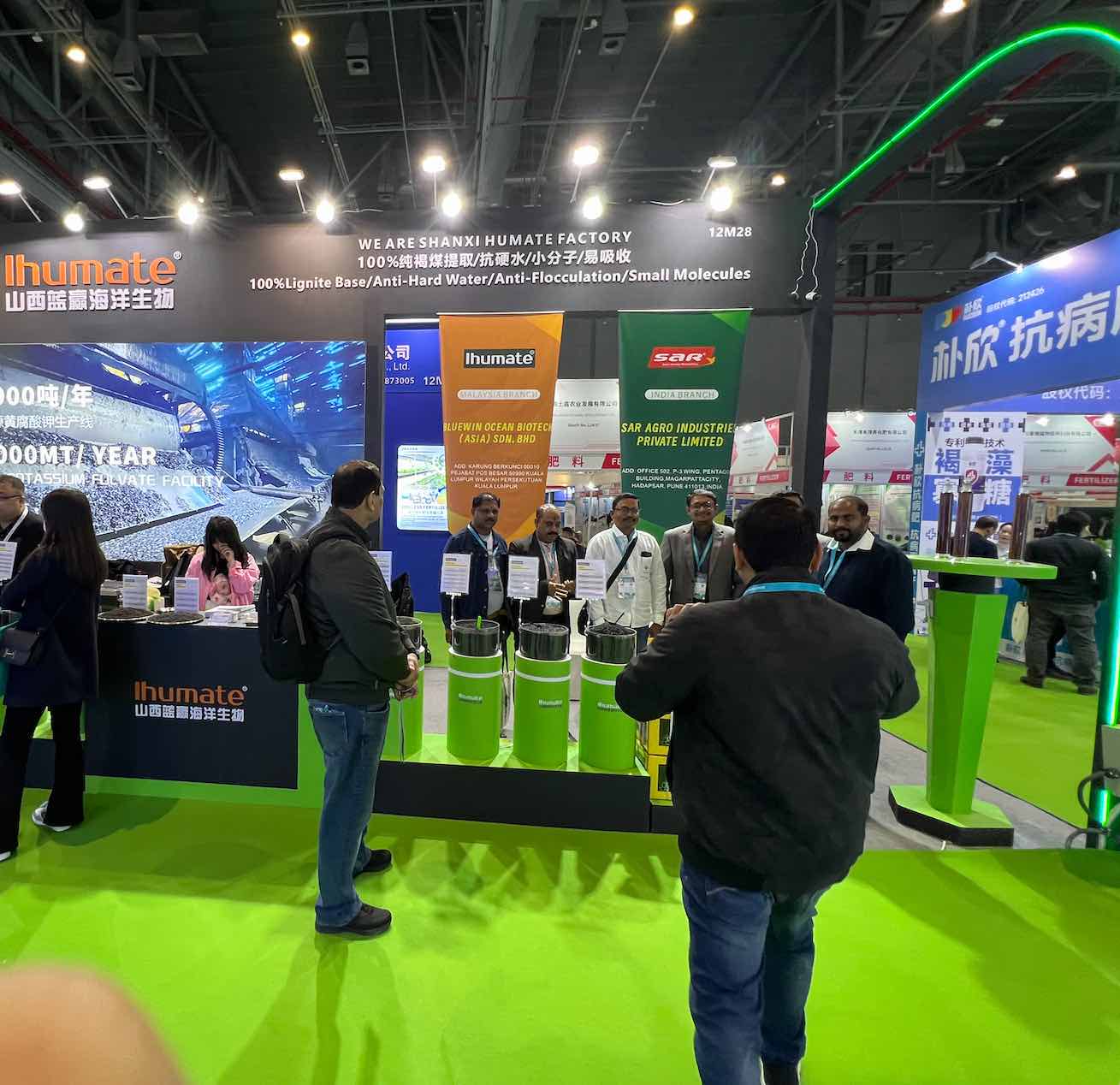
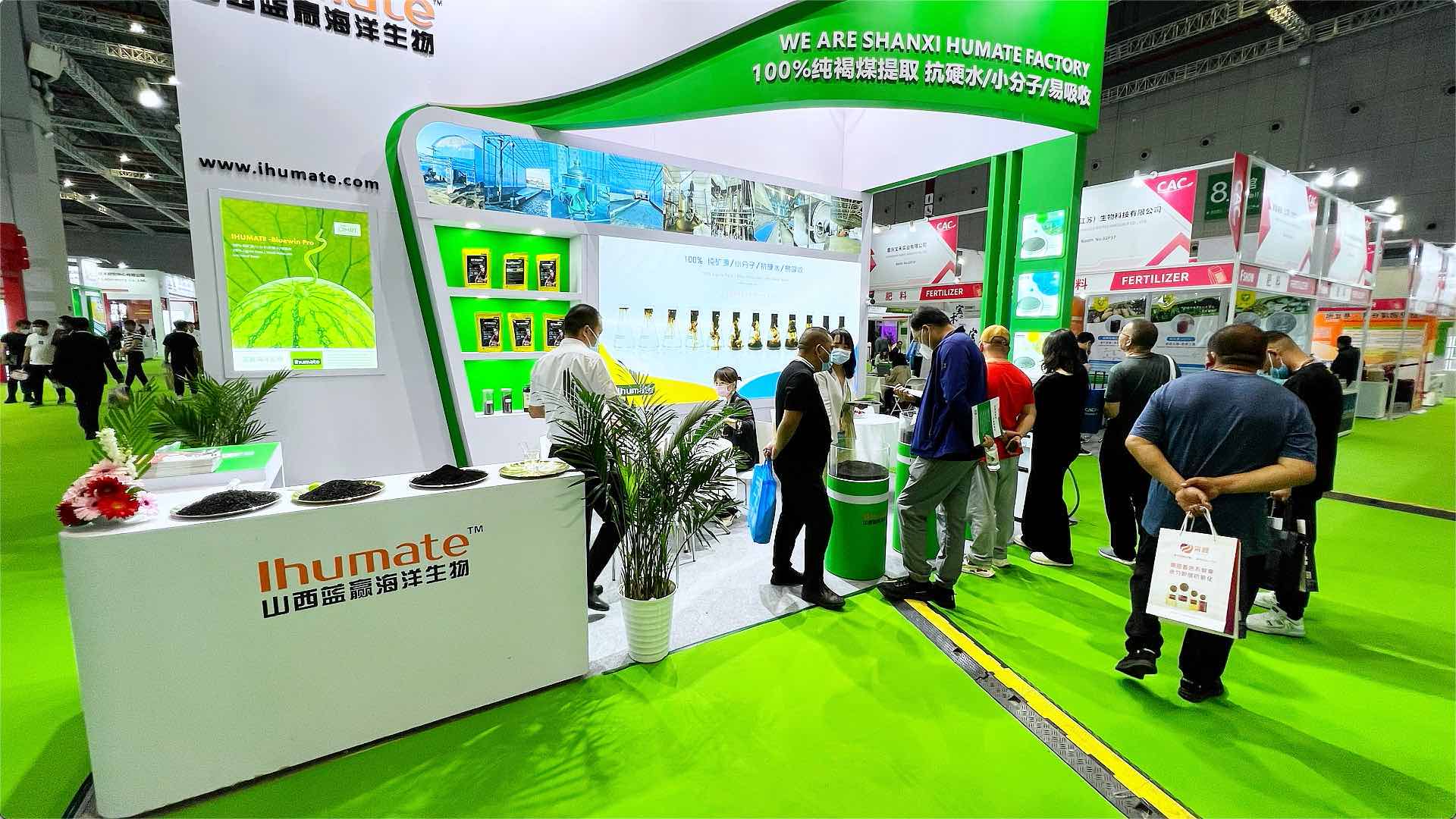
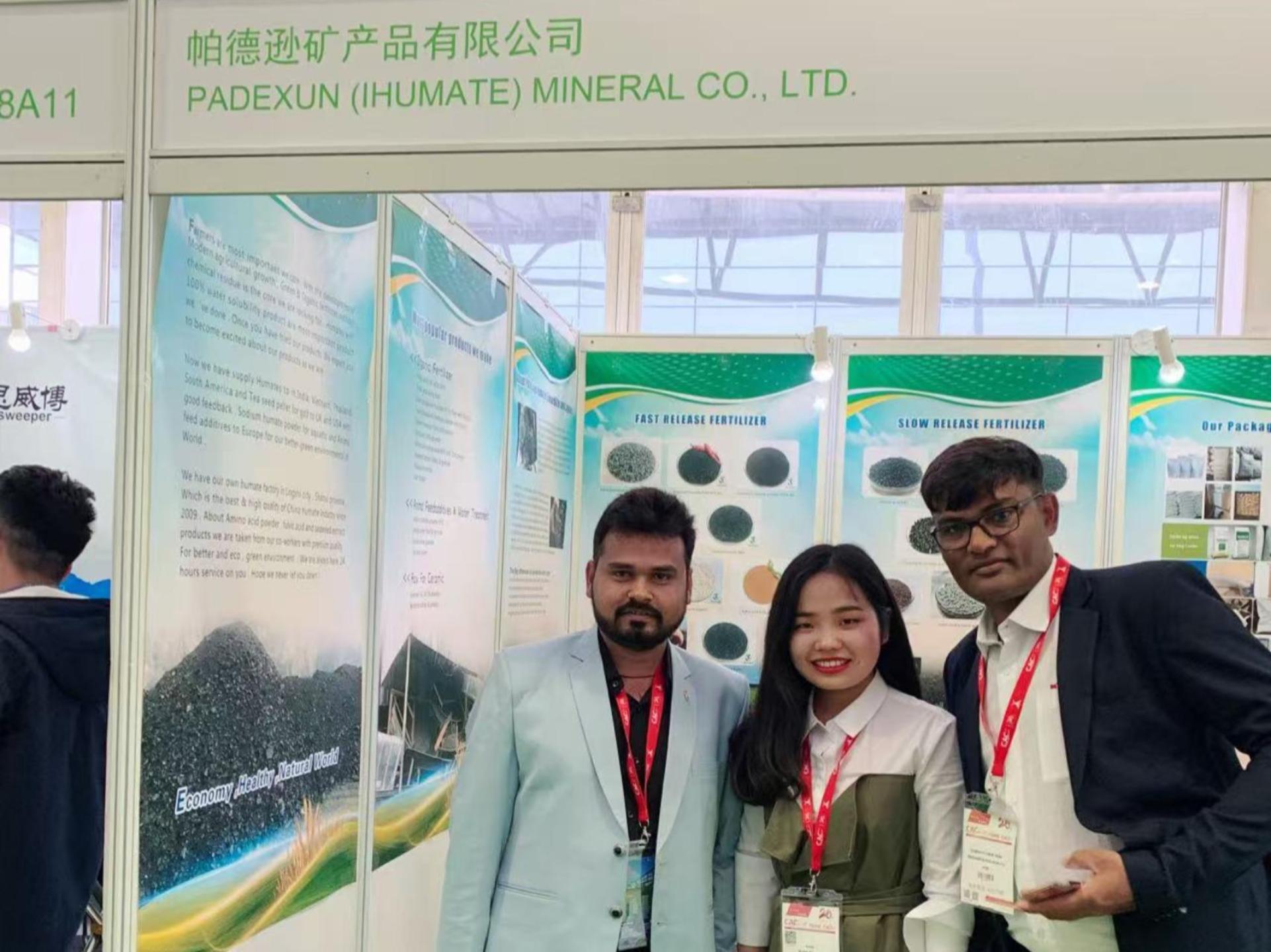
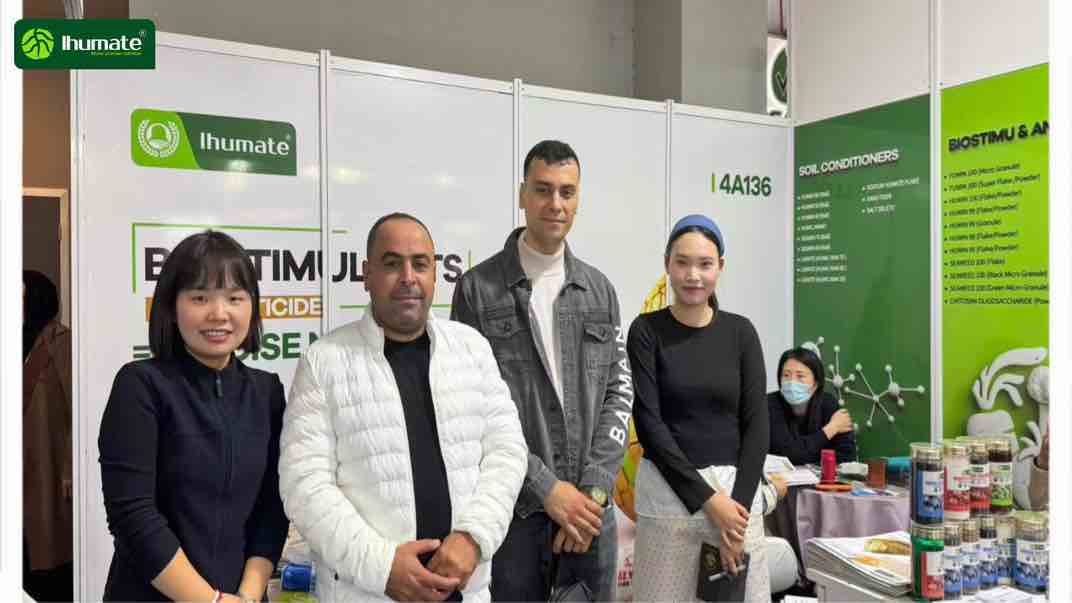
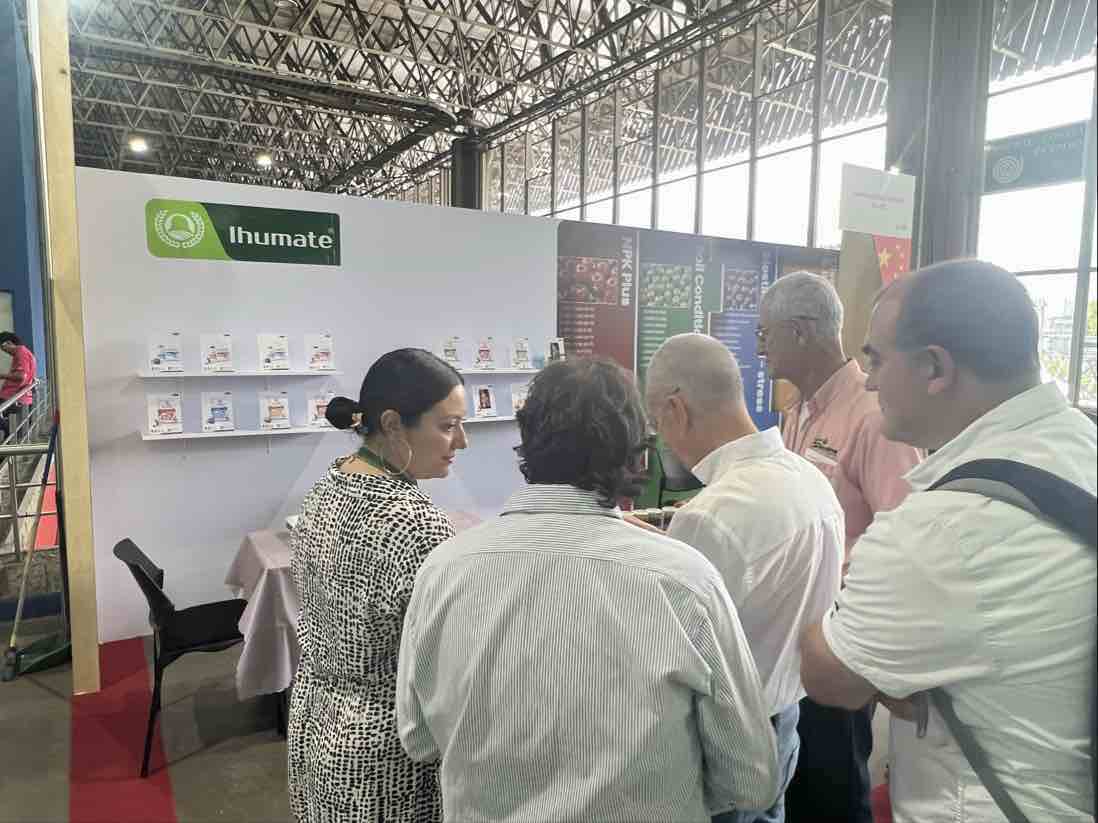
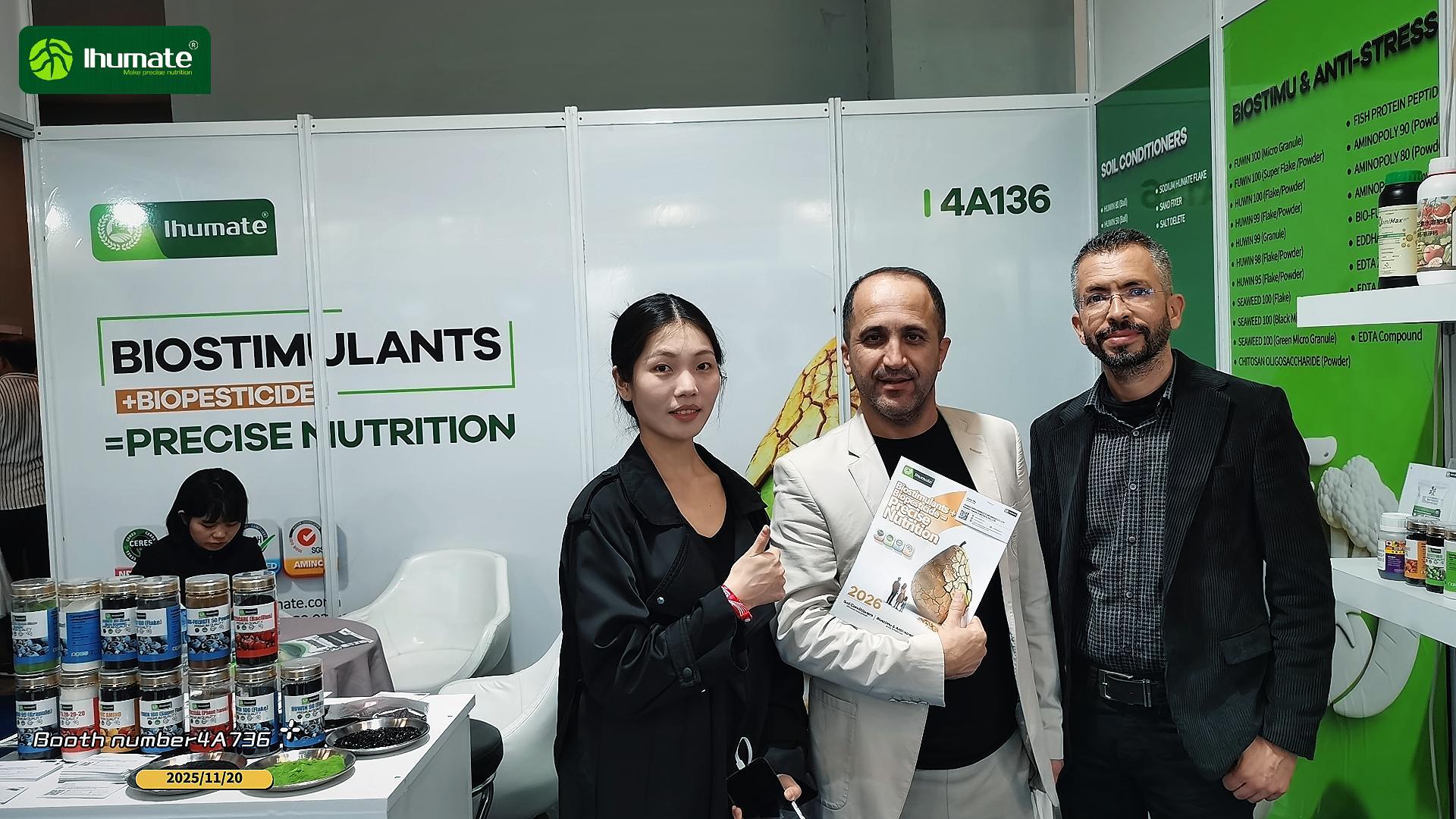
Ihumate Global Exhibition Videos
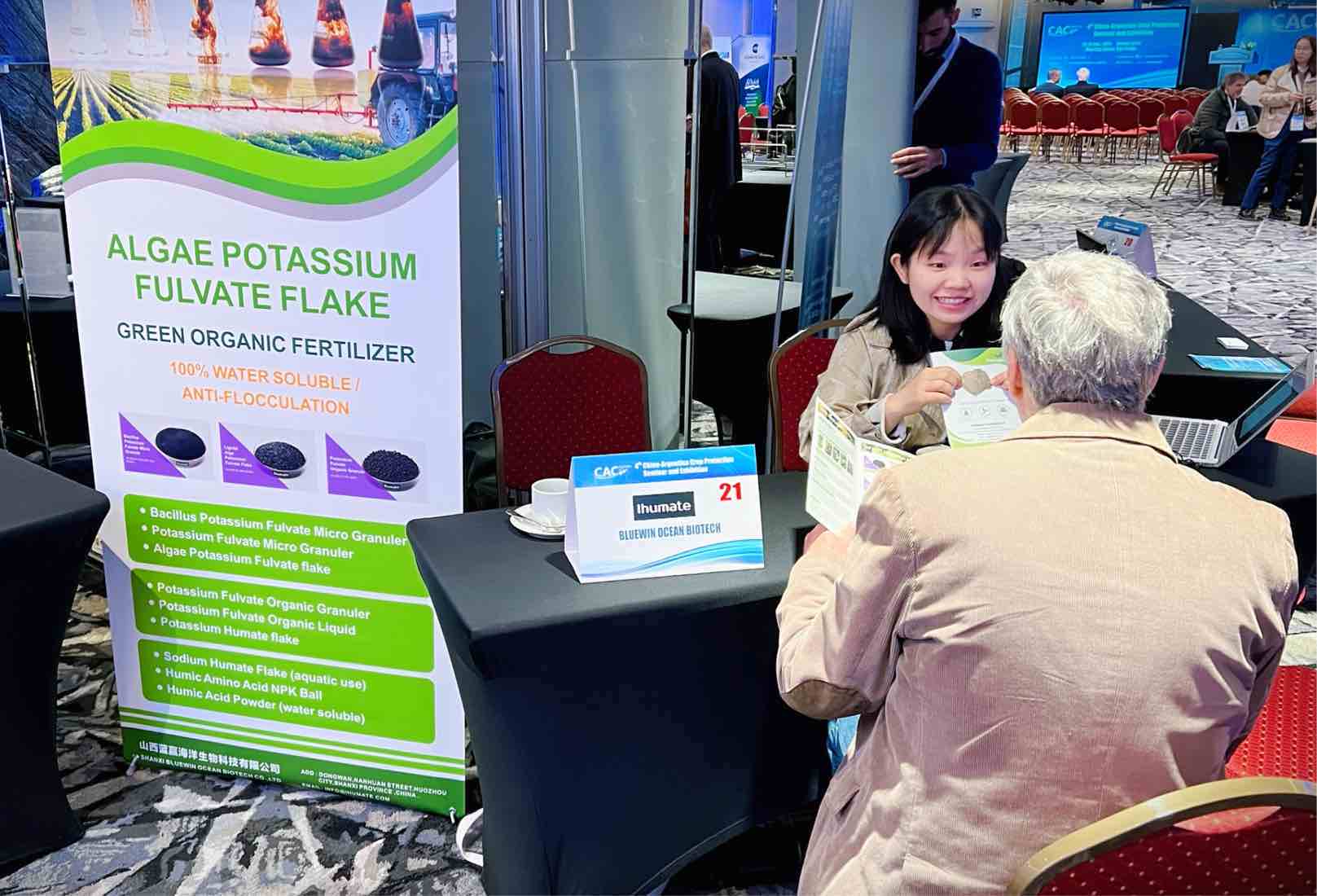
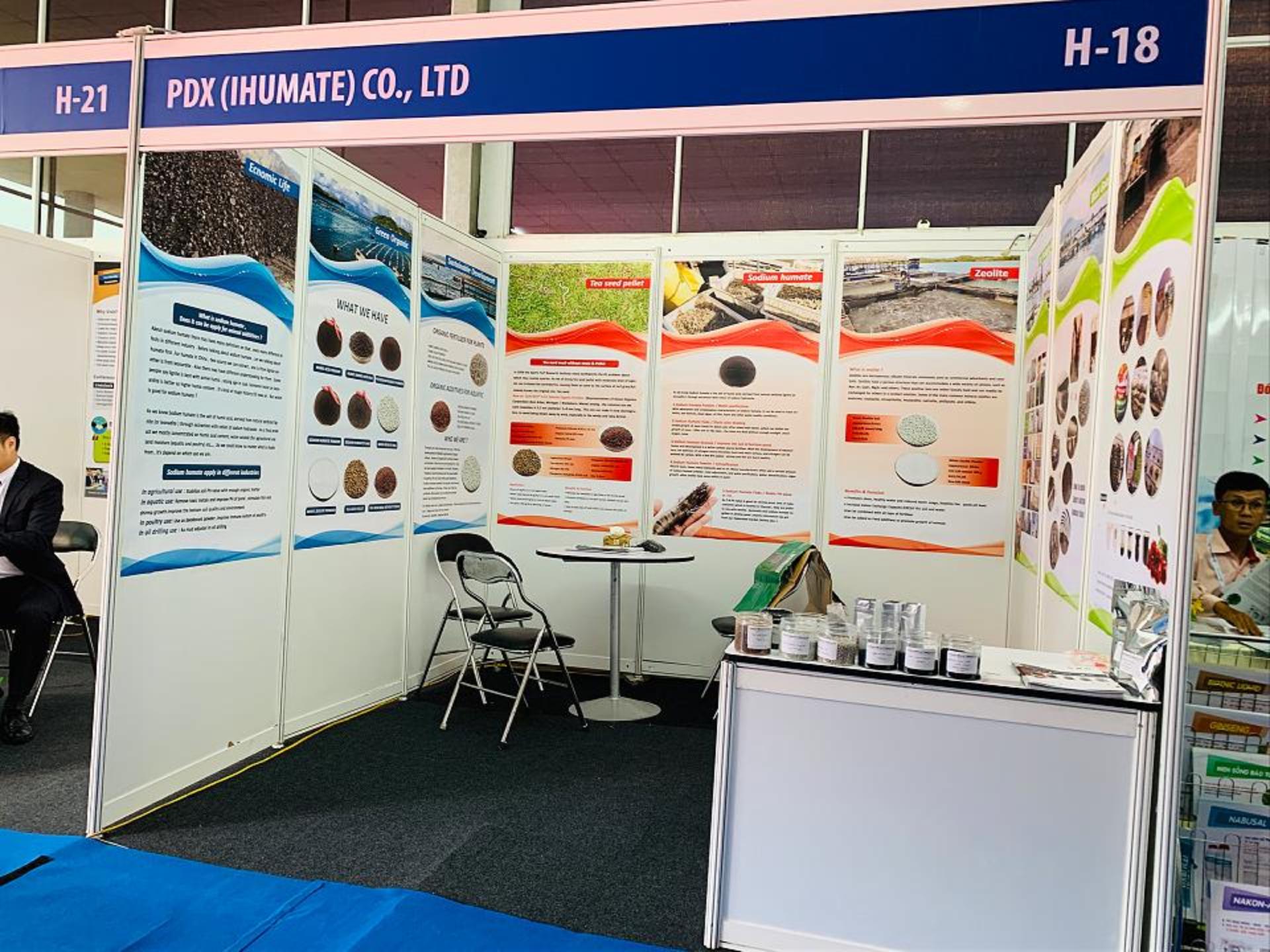
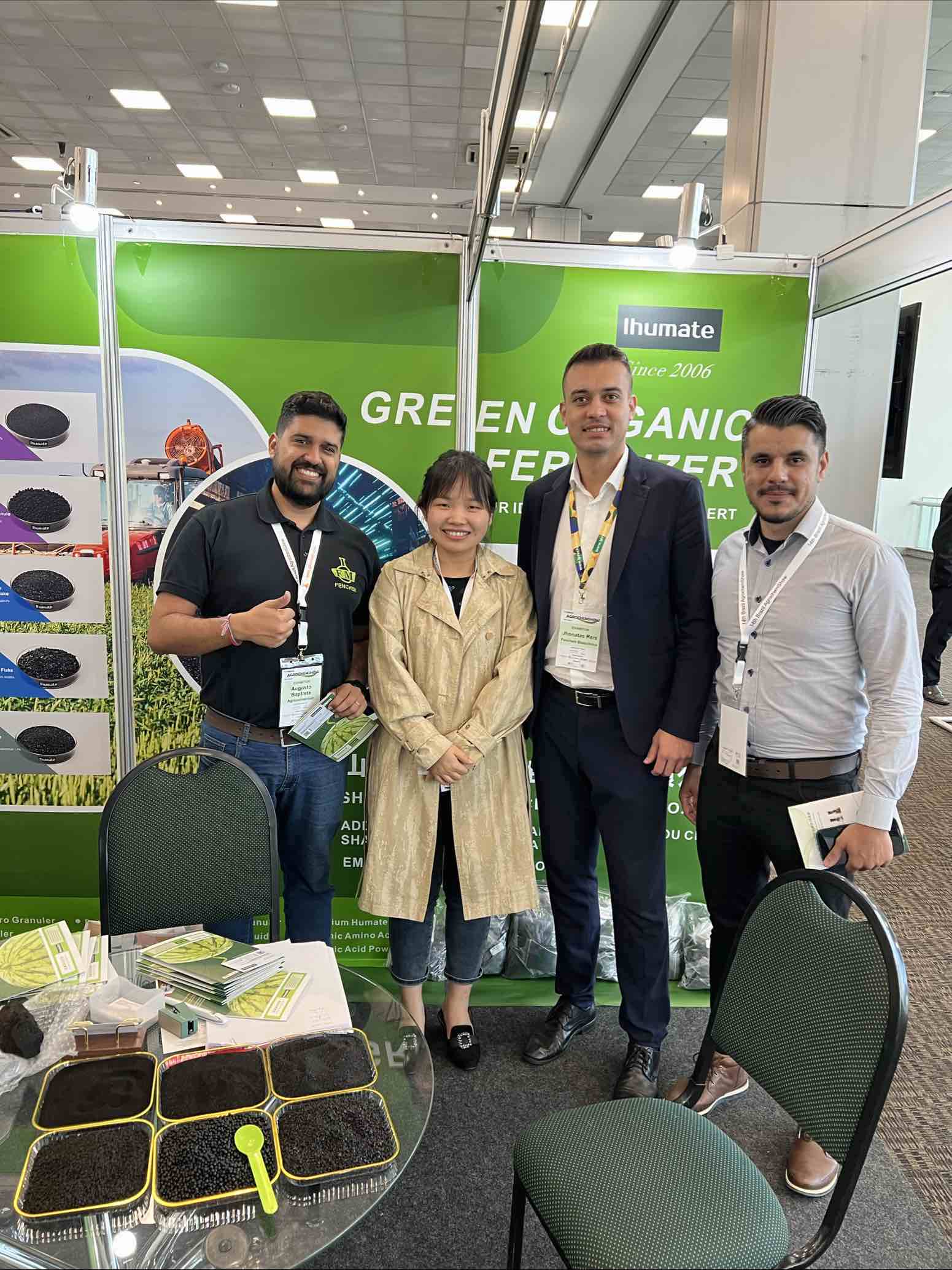
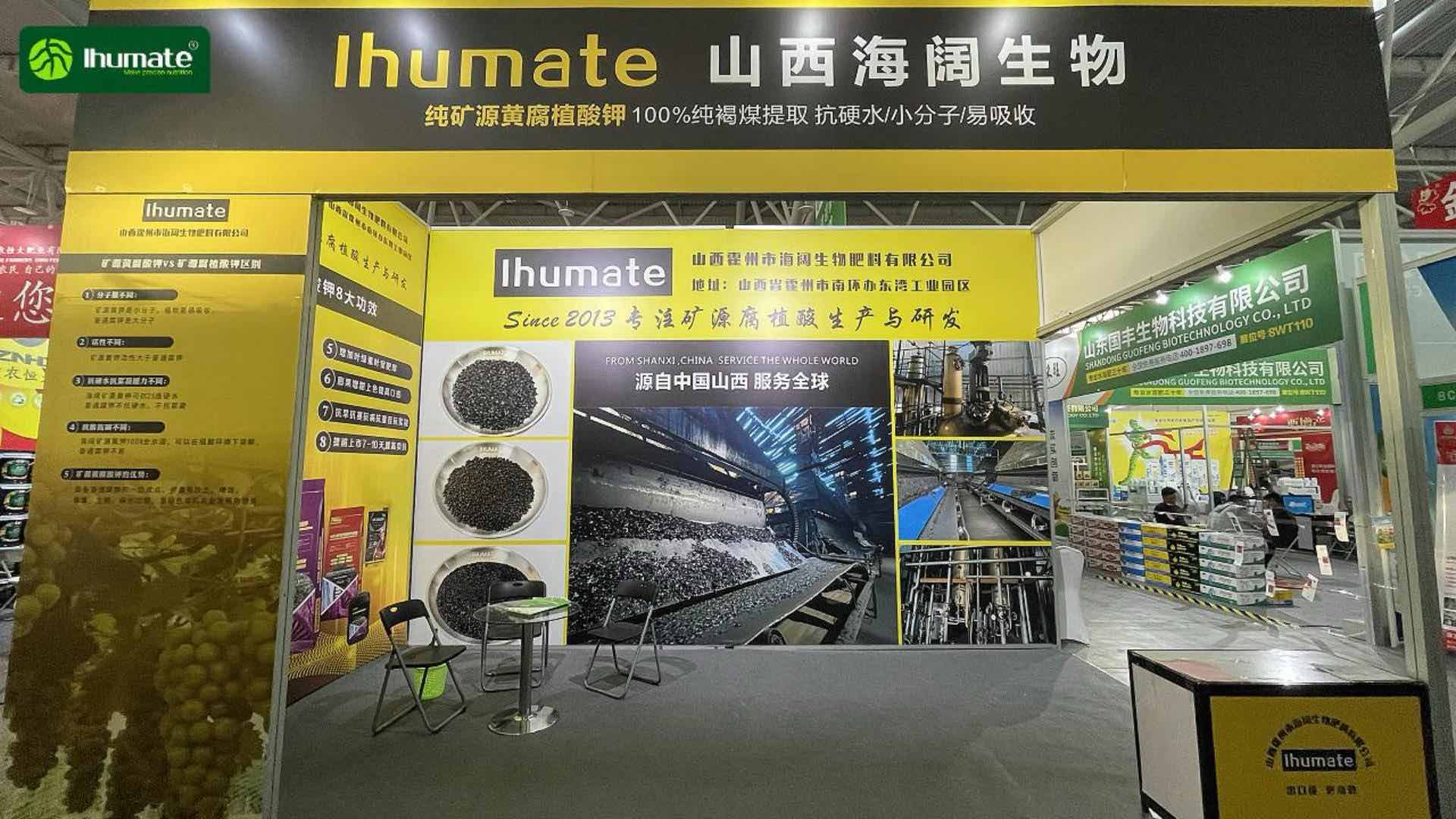
We showcase our Humic Acid, Seaweed, Liquid Fertilizer, and Bio-control series globally.
Join us at our 2026 exhibitions:
Event: Shanghai CAC (Fshow)
Booth: 12G05
Date: March 17-19, 2026
Address: No. 333 Songze Avenue, Qingpu District, Shanghai
Join us at our 2026 exhibitions:
Event: Shanghai CAC (Fshow)
Booth: 12G05
Date: March 17-19, 2026
Address: No. 333 Songze Avenue, Qingpu District, Shanghai

No. 64 Nangou, Chencun, Bailong Town, Huozhou City, Linfen City, Shanxi Province

© 2017 Shanxi Ihumate Biotech Co.,Ltd. All Rights Reserved | Privacy Policy | Powered by Ihumate